
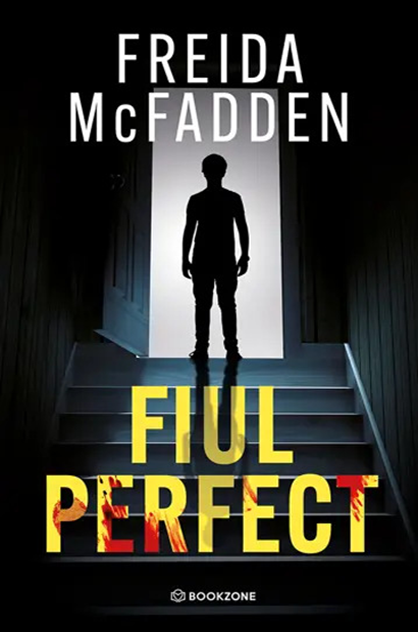
- Rating: ★★★★☆
- Editura: Bookzone
- Traducere: Mihaela Apetrei
- Pagini: 320
- Goodreads: Fiul perfect
- Poate fi cumpărată de aici: https://bookzone.ro/carte/fiul-perfect-bkz
Am impresia că de fiecare dată când citesc o carte de Freida McFadden ajung să spun că m-am obișnuit cu stilul ei și că data viitoare nu mă va mai putea surprinde. Și, de fiecare dată, mă înșel. Autoarea reușește să găsească o nouă modalitate de a mă face să mă răzgândesc cu privire la personaje, să mă îndoiesc de propriile teorii și, mai ales, să cred că am înțeles unde se îndreaptă povestea, pentru ca apoi să-mi demonstreze că nu am avut dreptate. Așa s-a întâmplat și cu „Fiul perfect”, un thriller pe care l-am citit cu foarte mult interes și care m-a făcut să schimb destul de des direcția teoriilor mele.
Povestea o are în centru pe Erika, o mamă care și-a construit întreaga viață în jurul ideii că trecutul nu trebuie să se repete. Erika a crescut într-o familie în care răul a fost mult prea prezent și știe foarte bine ce înseamnă să trăiești cu frica și cu urmările faptelor unei persoane apropiate. Tocmai de aceea, atunci când a devenit mamă, și-a promis că fiul ei va avea o copilărie diferită și că va face tot posibilul pentru ca el să nu ajungă asemenea tatălui său.
Fiul ei, Liam, pare să fie exact copilul pe care orice părinte și l-ar dori. Are 17 ani, este inteligent, carismatic, apreciat la școală și foarte bun la dezbateri. Este genul de adolescent care știe să vorbească frumos, care poate să pară calm și politicos chiar și atunci când se află într-o situație dificilă. Din exterior, nu pare să existe nimic care să-l facă periculos. Din contră, are acel aer de băiat cuminte și aproape imposibil de suspectat.
Dar tocmai această imagine de „copil perfect” începe să devină neliniștitoare atunci când o fată de vârsta lui dispare, iar poliția ajunge la ușa familiei. Erika află că Liam a fost ultima persoană cunoscută care a văzut-o în viață. Din acel moment, tot ceea ce credea că știe despre fiul ei începe să fie pus sub semnul întrebării.
Mi-a plăcut foarte mult ideea de la baza poveștii, pentru că nu este vorba doar despre întrebarea „A făcut-o Liam?”, ci și despre cât de bine putem ajunge, de fapt, să cunoaștem o persoană pe care o iubim. Erika este pusă în situația în care trebuie să aleagă între instinctul de mamă, care îi spune să-și protejeze copilul, și toate lucrurile care încep să nu se mai potrivească. Iar faptul că ea însăși are un trecut atât de complicat face totul și mai interesant. Erika nu este doar mama unui posibil suspect, ci și o femeie care poartă cu ea propriile traume și propriile frici.
Unul dintre lucrurile care mi-au plăcut cel mai mult la carte a fost modul în care au fost construite personajele și misterul din jurul lor. Am ajuns să suspectez aproape pe toată lumea. Fiecare personaj mi se părea că ascunde ceva, fiecare reacție putea avea o explicație diferită și fiecare informație nouă mă făcea să-mi schimb puțin teoria. Nu am avut senzația că există un singur personaj evident asupra căruia să arate toate degetele. Din contră, autoarea m-a făcut să mă uit cu suspiciune la aproape fiecare dintre ei.
Liam mi s-a părut, în special, un personaj foarte interesant tocmai prin contrastul dintre imaginea lui și întrebările care apar treptat în jurul lui. Este dificil să-ți dai seama dacă ceea ce vezi este adevărata lui personalitate sau doar imaginea pe care a învățat să o arate celorlalți. Iar aici mi s-a părut că autoarea se joacă foarte bine cu ideea aparențelor: cât de ușor putem avea încredere într-o persoană doar pentru că pare blândă, educată și vulnerabilă?
Mi-a plăcut și faptul că povestea m-a făcut să mă gândesc la felul în care reacționăm atunci când cineva pe care îl iubim este acuzat de ceva îngrozitor. Dacă ar fi vorba despre copilul tău, ai putea să accepți că este vinovat sau ai încerca să găsești orice explicație posibilă pentru a-l apăra? Erika este prinsă exact în acest conflict și cred că această parte a poveștii a făcut-o mai ușor de înțeles ca personaj.
Pe parcursul lecturii am avut foarte multe teorii. Unele mi s-au părut extrem de convingătoare în momentul respectiv, iar după câteva capitole ajungeam să le abandonez complet. Tocmai de aceea am citit cartea cu un interes destul de ridicat și cu multă curiozitate. Voiam să aflu cât mai repede ce s-a întâmplat cu adevărat și eram nerăbdătoare să văd dacă una dintre teoriile mele avea să se dovedească adevărată.
Și trebuie să recunosc că mi-a plăcut faptul că personajul negativ a fost, în cele din urmă, cel pe care îl suspectam cel mai puțin. Nu o să spun mai multe pentru că mi s-ar părea păcat să stric surpriza, mai ales într-un thriller în care tocmai descoperirea adevărului este una dintre cele mai importante părți ale experienței. Pentru mine, acesta a fost unul dintre punctele forte ale cărții și motivul pentru care am simțit că misterul a funcționat atât de bine.
În același timp, nu pot spune că a fost un thriller perfect pentru mine. Au existat câteva momente în care mi s-a părut că anumite lucruri sunt puțin prea convenabile sau că ritmul nu a fost la fel de intens pe tot parcursul cărții. Cred că, în cazul Freidei McFadden, am ajuns să am anumite așteptări legate de răsturnările de situație, iar uneori am încercat să caut prea mult „șmecheria” din spatele poveștii. Totuși, chiar și atunci când credeam că am prins ideea, cartea reușea să-mi schimbe din nou perspectiva.
Per total, „Fiul perfect” mi-a plăcut destul de mult și mi se pare o alegere potrivită pentru cei care iubesc thrillerele psihologice cu personaje greu de descifrat, secrete de familie și multe întrebări. Mi-a plăcut în special faptul că nu am putut avea încredere deplină în aproape nimeni și că am fost ținută într-o stare constantă de suspiciune. Este genul de carte pe care o citești și te gândești mereu: „Dar dacă totuși…?”, iar apoi mai citești încă un capitol pentru că trebuie neapărat să afli adevărul.
Nu a devenit una dintre cărțile mele preferate ale autoarei, dar mi-a oferit exact genul de lectură pe care îl caut uneori: ușor de citit, tensionată, cu personaje suspecte, secrete și suficiente răsturnări de situație cât să mă țină curioasă până la final. Iar faptul că, deși am bănuit aproape pe toată lumea, nu am reușit să identific personajul negativ până la urmă, este cu siguranță un punct în plus.
Și, probabil, asta este partea amuzantă la cărțile Freidei McFadden: pornesc lectura convinsă că de data aceasta nu mă mai poate păcăli, pentru că deja îi cunosc stilul, iar la final ajung din nou să mă întreb cum de am ratat exact lucrul pe care trebuia să-l observ.


The Perfect Son – Freida McFadden
I have a feeling that every time I read a book by Freida McFadden, I end up saying that I’ve gotten used to her style and that she won’t be able to surprise me next time. And every single time, I’m wrong. The author manages to find a new way to make me change my mind about the characters, question my own theories and, most importantly, believe that I’ve figured out where the story is going, only to prove me wrong. That’s exactly what happened with „The Perfect Son”, a thriller I read with a lot of interest and one that made me change the direction of my theories quite a few times.
The story centers around Erika, a mother who has built her entire life around the idea that the past must not repeat itself. Erika grew up in a family where evil was far too present, and she knows all too well what it means to live with fear and with the consequences of someone close to you. That is precisely why, when she became a mother, she promised herself that her son would have a different childhood and that she would do everything in her power to make sure he would never become like his father.
Her son, Liam, seems to be exactly the kind of child any parent would want. He is seventeen, intelligent, charismatic, well-liked at school, and very good at debating. He is the kind of teenager who knows how to speak politely, who can appear calm and well-mannered even when he finds himself in a difficult situation. From the outside, there seems to be nothing about him that would make him dangerous. On the contrary, he has that image of a good kid who would be almost impossible to suspect.
But that image of the “perfect child” starts to become unsettling when a girl his age disappears and the police show up at the family’s door. Erika learns that Liam was the last person known to have seen her alive. From that moment on, everything she thought she knew about her son begins to be called into question.
I really liked the idea at the heart of the story because it isn’t just about the question, “Did Liam do it?” It is also about how well we can actually know someone we love. Erika is put in a situation where she has to choose between her maternal instinct, which tells her to protect her child, and all the things that are starting to no longer add up. And the fact that she herself has such a complicated past makes everything even more interesting. Erika isn’t just the mother of a possible suspect; she is also a woman carrying her own traumas and fears.
One of the things I liked most about the book was the way the characters and the mystery surrounding them were developed. I ended up suspecting almost everyone. Every character seemed to be hiding something, every reaction could have a different explanation, and every new piece of information made me change my theory slightly. I never felt like there was one obvious character for everyone to point their finger at. On the contrary, the author made me look at almost every one of them with suspicion.
Liam, in particular, struck me as a very interesting character precisely because of the contrast between his image and the questions that gradually arise around him. It is difficult to tell whether what you are seeing is his true personality or simply the image he has learned to show other people. And this is where I felt the author played very well with the idea of appearances: how easily can we trust someone simply because they seem kind, well-mannered, and vulnerable?
I also liked the fact that the story made me think about how we react when someone we love is accused of something horrible. If it were your own child, would you be able to accept that they were guilty, or would you try to find any possible explanation to defend them? Erika is caught in exactly this conflict, and I think this part of the story made her much easier to understand as a character.
Throughout the book, I had so many theories. Some of them seemed extremely convincing at the time, only for me to completely abandon them a few chapters later. That is precisely why I read the book with a high level of interest and a lot of curiosity. I wanted to find out as quickly as possible what had really happened, and I was eager to see whether one of my theories would turn out to be correct.
And I have to admit that I liked the fact that, in the end, the villain was the person I suspected the least. I won’t say anything more because I would hate to ruin the surprise, especially in a thriller where discovering the truth is such an important part of the experience. For me, this was one of the book’s strongest points and one of the reasons why I felt the mystery worked so well.
At the same time, I can’t say that it was a perfect thriller for me. There were a few moments when I felt that certain things were a little too convenient or that the pacing wasn’t quite as intense throughout the entire book. I think that, when it comes to Freida McFadden, I’ve developed certain expectations regarding plot twists, and sometimes I tried too hard to look for the “trick” behind the story. Still, even when I thought I had figured things out, the book managed to change my perspective once again.
Overall, I liked „The Perfect Son” quite a lot, and I think it is a good choice for anyone who enjoys psychological thrillers with hard-to-decipher characters, family secrets, and plenty of questions. I especially liked the fact that I couldn’t fully trust almost anyone and that I was kept in a constant state of suspicion. It’s the kind of book you read while constantly thinking, “But what if…?”, and then you read one more chapter because you absolutely have to find out the truth.
It didn’t become one of my favorite books by the author, but it gave me exactly the kind of reading experience I sometimes look for: easy to read, tense, with suspicious characters, secrets, and enough twists to keep me curious until the very end. And the fact that, even though I suspected almost everyone, I still failed to identify the villain in the end is definitely a point in its favor.
And, probably, that’s the funny thing about Freida McFadden’s books: I start reading convinced that this time she won’t be able to fool me because I already know her style, and by the end I’m once again wondering how I managed to miss exactly the thing I was supposed to notice.
