
- Rating: ★★★☆☆
- Editura: Trei, imprint Fiction Connection / Thriller
- Traducere: Ioana Văcărescu
- Pagini: 320
- Goodreads: Vila
- Poate fi cumpărată de aici: https://www.edituratrei.ro/carte/vila/13478/
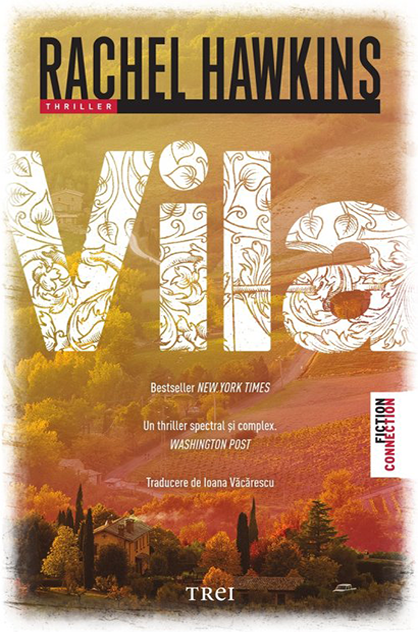
„Vila” de Rachel Hawkins a fost una dintre cărțile pe care le-am avut pe lista de lecturi încă de când a apărut. Recunosc că primul lucru care m-a atras a fost coperta. Mi s-a părut că are exact atmosfera aceea misterioasă și ușor întunecată pe care o caut în lecturile de toamnă, așa că, după ce am tot amânat-o, m-am hotărât în sfârșit să-i dau o șansă. În plus, sinopsisul mi-a atras imediat atenția: o vilă izolată din Italia, o crimă petrecută cu zeci de ani în urmă, secrete, prietenii complicate și două opere celebre care par să ascundă indicii despre ceea ce s-a întâmplat. Aveam, așadar, așteptări destul de mari.
Povestea o are în centrul ei pe Emily, o scriitoare care trece printr-o perioadă mai puțin bună atât pe plan personal, cât și profesional. Ea pleacă în Italia împreună cu Chess, prietena ei din copilărie, în speranța că această vacanță le va ajuta să se apropie din nou. Cele două nu mai au relația de altădată, iar tensiunile dintre ele devin tot mai vizibile pe măsură ce povestea avansează. Emily este mai retrasă și atentă la detalii, în timp ce Chess pare mult mai sigură pe ea, mai carismatică și mai obișnuită să obțină ceea ce își dorește. Diferențele dintre ele sunt interesante, mai ales pentru că prietenia lor ascunde destul de multe frustrări, comparații și nemulțumiri.
Cele două ajung să locuiască în Vila Aestas, o proprietate superbă din Orvieto, care are însă un trecut foarte întunecat. În 1974, vila purta numele de Vila Rosato și aici s-a petrecut o tragedie despre care încă nu se știe tot adevărul. În acea vară, vila era ocupată de un grup de tineri care trăiau într-o atmosferă de petreceri, droguri, muzică și relații complicate. În centrul evenimentelor se află Noel Gordon, un muzician talentat și foarte carismatic, dar și manipulator, alături de Pierce Sheldon, un scriitor care își petrece vara în vilă împreună cu iubita lui, Mari. Relațiile dintre aceste personaje devin din ce în ce mai tensionate, iar gelozia și dorința de succes ajung să aibă consecințe serioase.
Mi-a plăcut ideea că povestea se construiește pe două planuri temporale. Pe de o parte, o urmărim pe Emily în prezent, încercând să afle ce s-a întâmplat în vilă. Pe de altă parte, descoperim treptat vara din 1974 și oamenii care au locuit acolo. Emily începe să cerceteze trecutul vilei și observă că lucrurile nu sunt atât de simple pe cât par. Există legături între tragedia din trecut și două opere care au devenit ulterior foarte cunoscute: un roman horror și un album muzical.
Atmosfera este, fără îndoială, unul dintre punctele forte ale cărții. Vila italiană, izolarea, trecutul violent, manuscrisele, poveștile despre personaje excentrice și toate secretele care ies treptat la suprafață creează o imagine foarte potrivită pentru o poveste gotică. Am avut senzația că vila însăși este un personaj al romanului, pentru că trecutul ei apasă constant asupra celor care ajung să locuiască acolo. Mi-a plăcut și felul în care autoarea se joacă cu ideea de povești care se inspiră unele din altele și cu întrebarea dacă ceea ce citim este adevărul sau doar versiunea pe care cineva a ales să o spună.
Totuși, aici am avut și principala mea problemă cu romanul. Deși ideea de bază mi s-a părut foarte bună, am simțit că povestea s-a complicat uneori mai mult decât era nevoie. Sunt multe detalii, informații despre trecut, povești în interiorul poveștii și explicații care, în loc să-mi amplifice curiozitatea, au făcut ca lectura să fie mai greoaie. La început eram foarte dornică să aflu ce s-a întâmplat în vilă, însă pe parcurs entuziasmul meu a început să scadă. Mi-aș fi dorit ca misterul să fie construit într-un mod ceva mai direct și ca unele dintre firele narative să fie mai bine dozate.
Și, deși „Vila” este prezentată ca un thriller plin de mister și tensiune, eu nu am simțit foarte puternic acea senzație de neliniște și adrenalină pe care o caut într-un astfel de roman. Atmosfera este misterioasă, fără îndoială, însă acțiunea nu mi s-a părut suficient de alertă. Au existat momente în care eram curioasă să aflu ce urmează, dar nu pot spune că am stat cu sufletul la gură sau că am simțit nevoia să citesc neapărat încă un capitol pentru a afla răspunsul. Pentru mine, partea de mister și atmosferă a funcționat mai bine decât componenta de thriller propriu-zis.
Nici relația dintre Emily și Chess nu m-a cucerit în totalitate. Mi s-a părut o relație rece, complicată și plină de lucruri nespuse. Înțeleg de ce autoarea a ales să construiască această prietenie în jurul geloziei, comparațiilor și resentimentelor, iar dinamica lor chiar este interesantă în anumite momente. Totuși, emoțional, nu am reușit să mă apropii foarte mult de niciuna dintre ele. Mi-a plăcut să descopăr treptat ce se află în spatele relației lor, dar nu am simțit acea conexiune cu personajele pe care o caut de obicei într-o carte.
În schimb, mi-a plăcut faptul că romanul vorbește destul de mult despre succes, inspirație și prețul pe care uneori oamenii sunt dispuși să-l plătească pentru a deveni cunoscuți. Personajele din 1974 sunt construite în jurul acestor dorințe și ambiții, iar gelozia profesională are un rol important în desfășurarea evenimentelor. Este interesant să vezi cum o poveste, o melodie sau o operă de artă se pot naște dintr-o experiență reală și cum, odată cu trecerea timpului, adevărul poate fi acoperit de legende și versiuni diferite.
Per total, „Vila” a fost o lectură care mi-a plăcut, dar nu atât de mult pe cât speram. Am pornit cu așteptări destul de mari, mai ales datorită premisei și atmosferei care m-au atras încă de la început, însă lectura nu a reușit să mă surprindă în măsura în care mi-aș fi dorit. Mi-a plăcut ideea unei povești despre o vilă cu un trecut întunecat, despre o crimă veche și despre modul în care aceasta a influențat două opere de succes, însă execuția mi s-a părut uneori prea încărcată.
Cred că „Vila” este o alegere potrivită pentru cei care preferă misterele cu o atmosferă gotică, poveștile despre secrete din trecut și romanele care combină mai multe perioade și perspective. Pentru mine, însă, a fost o lectură bună, dar nu memorabilă. Am apreciat decorul, premisa și modul în care Rachel Hawkins s-a jucat cu influențele gotice, însă ritmul mai lent, multitudinea de detalii și relația destul de distantă dintre personajele principale m-au făcut să mă bucur de carte mai puțin decât mă așteptam. Îi ofer trei stele din cinci pentru atmosferă, idee și mister, dar și pentru că, în ciuda tuturor lucrurilor care mi-au plăcut, am rămas cu senzația că povestea putea să-mi ofere ceva mai mult.


The Villa – Rachel Hawkins
„The Villa” by Rachel Hawkins has been one of the books on my TBR ever since it was released. I have to admit that the first thing that attracted me was the cover. It gave me exactly that mysterious and slightly dark atmosphere I look for in my autumn reads, so after putting it off for quite a while, I finally decided to give it a chance. On top of that, the synopsis immediately caught my attention: an isolated villa in Italy, a murder that took place decades ago, secrets, complicated friendships, and two famous works of art that seem to hide clues about what really happened. Needless to say, I had fairly high expectations.
The story centers around Emily, a writer who is going through a difficult period in both her personal and professional life. She travels to Italy with Chess, her childhood best friend, hoping that the vacation will help them reconnect. The two of them no longer have the relationship they once did, and the tension between them becomes increasingly obvious as the story progresses. Emily is more reserved and observant, while Chess seems much more confident, charismatic, and accustomed to getting what she wants. Their differences are interesting, especially because their friendship hides quite a few frustrations, comparisons, and resentments.
The two women end up staying at Villa Aestas, a beautiful property in Orvieto that has a very dark past. In 1974, the villa was known as Villa Rosato, and a tragedy took place there, one whose full truth is still unknown. That summer, the villa was occupied by a group of young people living in an atmosphere of parties, drugs, music, and complicated relationships. At the center of the events is Noel Gordon, a talented and incredibly charismatic but also manipulative musician, along with Pierce Sheldon, a writer who spends the summer at the villa with his girlfriend, Mari. The relationships between these characters become increasingly tense, and jealousy and the desire for success eventually have serious consequences.
I really liked the idea of the story being told across two different timelines. On the one hand, we follow Emily in the present as she tries to uncover what happened at the villa. On the other hand, we gradually discover what happened during the summer of 1974 and learn more about the people who lived there. Emily begins investigating the villa’s past and realizes that things are not as simple as they initially seem. There are connections between the tragedy in the past and two works that later became very well known: a horror novel and a musical album.
The atmosphere is, without a doubt, one of the book’s strongest points. The Italian villa, the isolation, the violent past, the manuscripts, the stories about eccentric characters, and all the secrets that gradually come to light create an atmosphere that feels very fitting for a gothic story. I had the feeling that the villa itself was almost a character in the novel, because its past constantly weighs on everyone who ends up living there. I also enjoyed the way the author plays with the idea of stories inspiring other stories and with the question of whether what we are reading is the truth or simply the version someone has chosen to tell.
However, this was also my main issue with the novel. Although I thought the basic premise was very good, I sometimes felt that the story became more complicated than it needed to be. There are a lot of details, information about the past, stories within the story, and explanations that, instead of increasing my curiosity, made the reading feel somewhat heavier. At the beginning, I was very eager to find out what had happened at the villa, but as the story progressed, my enthusiasm started to fade. I wish the mystery had been developed in a somewhat more straightforward way and that some of the narrative threads had been handled with a little more balance.
And although „The Villa” is presented as a thriller full of mystery and tension, I didn’t really experience the sense of unease and adrenaline that I usually look for in this type of novel. The atmosphere is definitely mysterious, but the action didn’t feel fast-paced enough to me. There were moments when I was curious to find out what would happen next, but I can’t say I was on the edge of my seat or felt the need to immediately read another chapter to get an answer. For me, the mystery and atmosphere worked much better than the actual thriller aspect.
I wasn’t completely won over by the relationship between Emily and Chess either. Their friendship felt cold, complicated, and full of unspoken things. I understand why the author chose to build their relationship around jealousy, comparisons, and resentment, and their dynamic is genuinely interesting at times. However, on an emotional level, I wasn’t able to connect very deeply with either of them. I enjoyed gradually discovering what was behind their friendship, but I didn’t feel the kind of connection with the characters that I usually look for in a book.
On the other hand, I liked the fact that the novel explores success, inspiration, and the price people are sometimes willing to pay in order to become famous. The 1974 characters are largely driven by these desires and ambitions, and professional jealousy plays an important role in how the events unfold. It’s interesting to see how a story, a song, or a work of art can be born from a real-life experience and how, over time, the truth can become buried beneath legends and different versions of what happened.
Overall, „The Villa” was a book I enjoyed, but not as much as I had hoped. I went into it with fairly high expectations, especially because of the premise and atmosphere that had attracted me from the beginning, but the story didn’t manage to surprise me as much as I would have liked. I enjoyed the idea of a story about a villa with a dark past, an old murder, and the way that murder influenced two successful works of art, but the execution sometimes felt overly complicated.
I think „The Villa” is a good choice for readers who enjoy mysteries with a gothic atmosphere, stories about secrets from the past, and novels that combine multiple timelines and perspectives. For me, however, it was a good read, but not a memorable one. I appreciated the setting, the premise, and the way Rachel Hawkins played with gothic influences, but the slower pace, the abundance of details, and the rather distant relationship between the main characters made me enjoy the book less than I had expected. I’m giving it three out of five stars for the atmosphere, the concept, and the mystery, as well as because, despite all the things I enjoyed, I was left with the feeling that the story could have offered me something more.
