
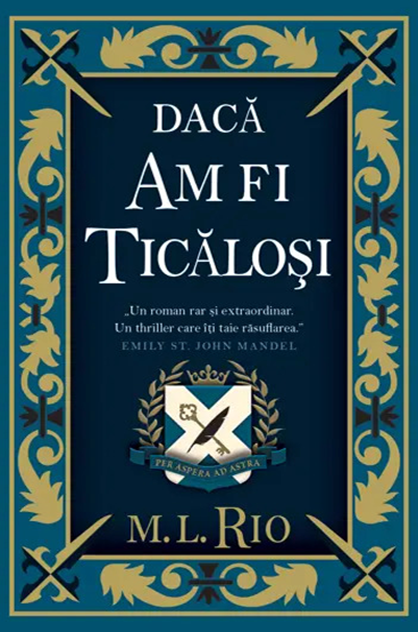
- Rating: ★★★☆☆
- Editura: Alice Books, imprint Daring Alice
- Traducere: Anacaona Mîndrilă-Sonetto
- Pagini: 416
- Goodreads: Dacă am fi ticăloși
- Poate fi cumpărată de aici: https://alicebooks.ro/produs/daca-am-fi-ticalosi/
„Dacă am fi ticăloși” de M.L. Rio a fost o lectură destul de diferită de ceea ce citesc eu de obicei. Este, de fapt, prima dată când citesc un thriller construit în jurul teatrului și al lui Shakespeare, iar ideea mi s-a părut foarte interesantă încă de la început. Cartea combină misterul, prietenia, rivalitatea, iubirea și pasiunea pentru actorie, toate într-un decor dominat de piese shakespeariene și de tineri care își petrec cea mai mare parte a timpului pe scenă. Mi-a plăcut ideea de a vedea cum granița dintre personajele interpretate de acești actori și personalitățile lor reale începe să devină tot mai greu de observat.
Povestea îl are în centru pe Oliver Marks, un tânăr actor care tocmai iese din închisoare după ce a ispășit zece ani pentru moartea unuia dintre cei mai apropiați prieteni ai săi. Problema este că nici după atât de mult timp nu este foarte clar ce s-a întâmplat în acea noapte și dacă Oliver este cu adevărat vinovat. Chiar în ziua eliberării sale, el este așteptat de detectivul Colborne, omul care s-a ocupat de cazul lui și care a contribuit la trimiterea sa în închisoare. Acum, înainte de pensionare, detectivul vrea să afle adevărul și îl face pe Oliver să se întoarcă, prin amintiri, la evenimentele care au avut loc cu zece ani în urmă.
O mare parte din roman se desfășoară în trecut, pe vremea când Oliver și prietenii lui studiau actoria într-un conservator de artă prestigios. Cei șapte tineri formează un grup foarte apropiat, iar fiecare pare să aibă un rol bine definit, atât în piesele pe care le joacă, cât și în viața de zi cu zi. Oliver este mai degrabă observatorul grupului și are impresia că, indiferent cât de mult se străduiește, va rămâne mereu în plan secund. Printre ceilalți se află James, cel mai talentat și carismatic dintre ei, Richard, un tânăr impulsiv și conflictual, Meredith, care pare să aibă o relație complicată cu ceilalți, dar și Alexander, Wren și Filippa. Fiecare dintre ei vine cu propriile secrete, dorințe și nesiguranțe, iar relațiile dintre ei devin din ce în ce mai complicate pe măsură ce povestea avansează.
Mi-a plăcut faptul că personajele sunt construite în jurul unor tipologii inspirate de piesele lui Shakespeare. Ei ajung să joace roluri precum eroul, ticălosul, tiranul sau seducătorul nu doar pe scenă, ci și în relațiile dintre ei. Mi s-a părut interesantă această idee, mai ales pentru că, pe măsură ce tensiunile cresc, devine tot mai greu de spus cine joacă un rol și cine își arată adevărata personalitate. Totuși, am avut și o problemă cu numărul personajelor. Sunt destul de multe, iar unele dintre nume mi s-au părut asemănătoare, așa că la început mi-a fost greu să îmi dau seama cine este cine și ce relație are fiecare cu ceilalți. A trebuit să treacă ceva timp până când am reușit să îi diferențiez și să îi urmăresc mai ușor.
Acțiunea pornește de la o rivalitate care, la început, pare aproape inofensivă. Atunci când profesorii schimbă distribuția pentru o piesă, relațiile dintre cei șapte prieteni încep să se schimbe, iar competiția dintre ei devine din ce în ce mai serioasă. Pasiunea pentru teatru și dorința de a primi anumite roluri scot la suprafață gelozii, frustrări și resentimente care existau probabil de mai mult timp. Situația se complică și mai mult atunci când ceea ce se întâmplă pe scenă începe să aibă consecințe în viața reală. Iar când unul dintre ei moare, ceilalți trebuie să demonstreze că nu au avut nicio legătură cu tragedia. De aici începe cu adevărat misterul și, în același timp, povestea pe care Oliver trebuie să i-o spună lui Colborne.
Unul dintre lucrurile care mi-au plăcut cel mai mult la carte au fost descrierile. Autoarea reușește să creeze foarte bine atmosfera conservatorului, a teatrului și a locurilor în care personajele își petrec timpul. Decorurile, peisajele și spațiile în care se desfășoară acțiunea mi-au fost foarte ușor de imaginat și cred că au avut un rol important în construirea misterului. Atmosfera devine treptat mai apăsătoare, iar decorul contribuie la senzația că ceva rău urmează să se întâmple. Mi-a plăcut această parte a romanului și cred că este unul dintre motivele pentru care am continuat lectura chiar și atunci când povestea mi s-a părut mai greu de urmărit.
Pe de altă parte, am simțit că romanului i-a lipsit puțin acel element care să mă facă să simt cu adevărat suspansul. Deși avem o crimă, secrete, personaje care ascund lucruri și o poveste spusă din două perioade de timp, eu nu am avut parte de acei fiori pe care îi caut de obicei într-un thriller. Misterul a fost interesant și am vrut să aflu ce s-a întâmplat, dar tensiunea nu a fost suficient de puternică pentru mine. Atmosfera a funcționat mai bine decât suspansul propriu-zis, iar cartea mi s-a părut mai degrabă un mister cu o puternică latură literară și teatrală decât un thriller care să mă țină cu sufletul la gură.
Și povestea mi s-a părut, pe alocuri, destul de încâlcită. Sunt multe relații între personaje, multe conflicte și foarte multe lucruri care se întâmplă în același timp, iar uneori am avut impresia că mă pierd printre toate acestea. În plus, nu am reușit să mă apropii prea mult de personaje. Am înțeles dinamica dintre ei și am putut să le observ comportamentele și schimbările, însă nu am ajuns să țin cu adevărat la ei. Unele dintre alegerile lor mi s-au părut greu de înțeles sau chiar discutabile și tocmai de aceea mi-a fost dificil să mă conectez emoțional cu ceea ce li se întâmplă.
Totuși, mi s-a părut interesant modul în care M.L. Rio folosește teatrul lui Shakespeare pentru a construi întreaga poveste. Referințele la Shakespeare nu sunt doar un element decorativ, ci se leagă de felul în care personajele se privesc pe ele însele și se comportă cu ceilalți. Ideea că oamenii pot ajunge să joace anumite roluri și în viața reală mi s-a părut una dintre cele mai reușite componente ale romanului. Uneori ai impresia că personajele nu mai știu unde se termină piesa și unde începe propria lor viață.
M.L. Rio are experiență atât în actorie, cât și în mediul academic, fiind specializată în studiile shakespeariene, iar acest lucru se simte foarte mult în carte. Cunoștințele ei despre teatru și Shakespeare sunt foarte bine integrate în poveste, iar pentru cineva pasionat de acest domeniu cred că romanul poate fi și mai interesant. În cazul meu, însă, partea teatrală a fost în același timp unul dintre cele mai interesante aspecte ale cărții, dar și unul dintre motivele pentru care lectura mi s-a părut uneori mai greu de parcurs.
Per total, „Dacă am fi ticăloși” a fost o carte cu o idee originală și cu o atmosferă foarte bine construită, dar care nu a reușit să mă cucerească în totalitate. Mi-au plăcut decorurile, conceptul personajelor care ajung să își trăiască propriile roluri shakespeariene și misterul din jurul morții lui Richard, însă am avut dificultăți în a ține pasul cu toate personajele și cu relațiile dintre ele. În plus, mi-a lipsit acel sentiment de tensiune și teamă pe care îl caut într-un thriller și nu am reușit să mă conectez atât de mult pe cât mi-aș fi dorit cu personajele și alegerile lor.
Este, așadar, o carte pe care am apreciat-o mai mult pentru atmosferă, ideea din spatele ei și felul în care teatrul este împletit cu povestea, decât pentru partea de thriller. Mă bucur că am încercat-o, mai ales pentru că a fost ceva diferit de ceea ce citesc în mod obișnuit, dar pentru mine a rămas o lectură de trei stele: interesantă și bine scrisă pe alocuri, însă cu câteva aspecte care mi-au diminuat plăcerea lecturii.


If We Were Villains – M.L. Rio
„If We Were Villains” by M.L. Rio was quite a different read from what I usually read. In fact, this is the first time I’ve read a thriller built around theatre and Shakespeare, and I found the idea very interesting from the beginning. The book combines mystery, friendship, rivalry, love, and a passion for acting, all within a setting dominated by Shakespearean plays and young people who spend most of their time on stage. I liked the idea of seeing how the line between the characters these actors portray and their real personalities gradually becomes harder and harder to distinguish.
The story centers around Oliver Marks, a young actor who has just been released from prison after serving ten years for the death of one of his closest friends. The problem is that, even after all this time, it is still not entirely clear what happened that night or whether Oliver is truly guilty. On the very day of his release, he is met by Detective Colborne, the man who worked on his case and helped send him to prison. Now, before retiring, the detective wants to find out the truth and makes Oliver revisit, through his memories, the events that took place ten years earlier.
A large part of the novel takes place in the past, when Oliver and his friends were studying acting at a prestigious performing arts conservatory. The seven young actors form a very close-knit group, and each of them seems to have a clearly defined role, both in the plays they perform and in their everyday lives. Oliver is more of an observer within the group, and he feels that, no matter how hard he tries, he will always remain in the background. Among the others are James, the most talented and charismatic of them all; Richard, an impulsive and confrontational young man; Meredith, who seems to have a complicated relationship with the others; as well as Alexander, Wren, and Filippa. Each of them has their own secrets, desires, and insecurities, and their relationships become increasingly complicated as the story progresses.
I liked the fact that the characters are built around archetypes inspired by Shakespeare’s plays. They end up playing roles such as the hero, the villain, the tyrant, or the seducer not only on stage but also in their relationships with one another. I found this idea particularly interesting because, as the tensions grow, it becomes increasingly difficult to tell who is simply playing a role and who is revealing their true personality. However, I did have a problem with the number of characters. There are quite a few of them, and some of their names felt similar to me, so at the beginning it was difficult to keep track of who was who and what kind of relationship each person had with the others. It took me some time to distinguish between them and follow their relationships more easily.
The story begins with a rivalry that initially seems almost harmless. When the professors change the casting for a play, the relationships between the seven friends begin to shift, and their competition becomes increasingly serious. Their passion for theatre and their desire to get certain roles bring out jealousies, frustrations, and resentments that had probably existed for a long time. Things become even more complicated when what happens on stage starts having consequences in real life. And when one of them dies, the others have to prove that they had nothing to do with the tragedy. This is where the mystery truly begins, as well as the story Oliver has to tell Colborne.
One of the things I liked most about the book was the descriptions. The author does a great job of creating the atmosphere of the conservatory, the theatre, and the places where the characters spend their time. The settings, landscapes, and spaces where the story takes place were very easy for me to picture, and I think they played an important role in building the mystery. The atmosphere gradually becomes more oppressive, and the setting contributes to the feeling that something bad is about to happen. I really enjoyed this aspect of the novel, and I think it is one of the reasons I kept reading even when I found the story more difficult to follow.
On the other hand, I felt that the novel was missing something that would have made me truly feel the suspense. Even though we have a murder, secrets, characters hiding things, and a story told across two different periods of time, I didn’t experience the chills I usually look for in a thriller. The mystery was interesting, and I wanted to find out what had happened, but the tension was not strong enough for me. The atmosphere worked better than the actual suspense, and the book felt more like a mystery with a strong literary and theatrical element than a thriller that would keep me on the edge of my seat.
I also found the story quite tangled at times. There are many relationships between the characters, numerous conflicts, and so many things happening at once that I sometimes felt lost among all of them. On top of that, I wasn’t able to become particularly attached to the characters. I understood the dynamics between them and could observe their behavior and the ways they changed, but I never truly came to care about them. Some of their choices were difficult for me to understand or even questionable, and because of that, I found it difficult to connect emotionally with what was happening to them.
Still, I found the way M.L. Rio uses Shakespearean theatre to build the entire story very interesting. The references to Shakespeare are not merely decorative; they are connected to the way the characters see themselves and behave toward one another. The idea that people can end up playing certain roles in real life as well seemed to me to be one of the strongest aspects of the novel. At times, it feels as though the characters no longer know where the play ends and their own lives begin.
M.L. Rio has experience both in acting and in academia, specializing in Shakespeare studies, and this is very noticeable throughout the book. Her knowledge of theatre and Shakespeare is seamlessly integrated into the story, and for someone who is passionate about this subject, I think the novel could be even more interesting. In my case, however, the theatrical aspect was both one of the most interesting parts of the book and one of the reasons why I sometimes found the reading experience more difficult.
Overall, „If We Were Villains” was a book with an original premise and a very well-developed atmosphere, but it didn’t completely win me over. I liked the settings, the concept of the characters coming to live out their own Shakespearean roles, and the mystery surrounding Richard’s death, but I struggled to keep up with all the characters and their relationships. In addition, I missed the sense of tension and fear that I usually look for in a thriller, and I wasn’t able to connect with the characters and their choices as much as I would have liked.
So, this is a book that I appreciated more for its atmosphere, its central concept, and the way theatre is woven into the story than for its thriller elements. I’m glad I gave it a try, especially because it was something different from what I usually read, but for me it remained a three-star read: interesting and well-written in some respects, but with a few aspects that diminished my overall enjoyment of the book.
