
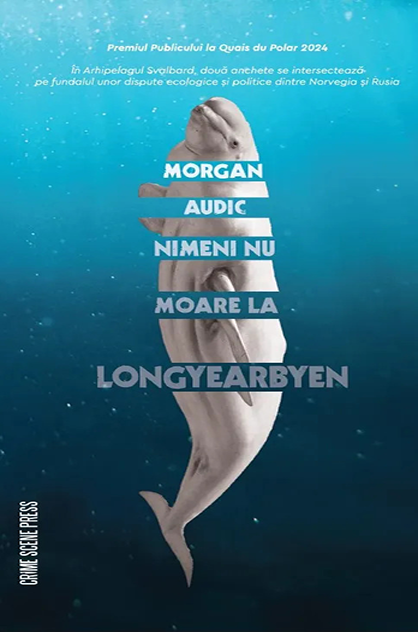
- Rating: ★★★★☆
- Editura: Crime Scene Press
- Traducere: Horia Nicola Ursu
- Pagini: 360
- Goodreads: Nimeni nu moare la Longyearbyen
- Poate fi cumpărată de aici: https://crimescenepress.ro/product/nimeni-nu-moare-la-longyearbyen
„Nimeni nu moare la Longyearbyen” de Morgan Audic este genul de thriller care nu încearcă să te țină permanent cu sufletul la gură, ci preferă să construiască misterul încet, din multe detalii aparent neînsemnate. Mi s-a părut o poveste interesantă, mai ales prin atmosfera pe care reușește să o creeze și prin felul în care cele două investigații, care la început par complet separate, ajung treptat să se apropie una de cealaltă.
Povestea începe în Longyearbyen, în arhipelagul Svalbard, unul dintre cele mai nordice orașe locuite permanent din lume. Aici este descoperit trupul unei tinere studente în biologie arctică, iar primele indicii sugerează că aceasta ar fi fost atacată de un urs polar. Cazul ajunge în atenția polițistei norvegiene Lottie, un personaj perseverent, care nu se mulțumește cu explicația aparent evidentă și începe să pună cap la cap lucrurile care nu se potrivesc. În paralel, în Insulele Lofoten, la mii de kilometri distanță, este găsit trupul unei foste jurnaliste, care ajunsese să conducă o agenție de excursii pe mare. La prima vedere, cele două crime nu par să aibă prea multe în comun, însă există un element care începe să atragă atenția: ambele victime erau interesate, într-un fel sau altul, de mamiferele marine.
Unul dintre lucrurile care mi-au plăcut la roman este tocmai această construcție în două planuri. Avem două locuri diferite, două victime și două investigații care evoluează separat, iar cititorul primește informații din ambele direcții. Pe măsură ce anchetele avansează, apar tot mai multe conexiuni, iar ceea ce părea inițial o simplă coincidență începe să capete un sens. Mi-a plăcut felul în care autorul nu dezvăluie imediat legătura dintre cele două cazuri, ci ne lasă să descoperim treptat cum se împletesc firele poveștii.
Alături de Lottie îl avem și pe Madsen, un corespondent de război care ajunge implicat în investigație. Relația dintre personaje și modul în care fiecare dintre ele privește evenimentele adaugă o dimensiune interesantă poveștii. Nu sunt personaje pe care să le cunoaștem doar prin meseria lor sau prin rolul pe care îl au în anchetă. Autorul le oferă și o latură personală, cu trecut, preocupări și vulnerabilități, iar pentru mine acest lucru a făcut ca investigația să fie mai ușor de urmărit și personajele mai ușor de înțeles. Mi-a plăcut că, dincolo de întrebarea „cine este vinovat?”, ajungem să fim curioși și în legătură cu oamenii care încearcă să rezolve cazul.
Acțiunea nu este una foarte alertă, iar acesta este probabil unul dintre aspectele care ar putea să nu fie pe placul tuturor. Ritmul este mai degrabă lent, însă am avut impresia că această alegere este intenționată. Ancheta înaintează prin discuții, observații, informații despre victime și despre locurile în care au trăit, iar detaliile se adună încet. Unele dintre ele par neimportante în momentul în care apar, dar ulterior își găsesc locul în imaginea de ansamblu. Personal, nu m-a deranjat acest ritm, pentru că mi-a plăcut senzația de a urmări investigația pas cu pas și de a încerca să-mi dau seama singură ce anume leagă toate aceste informații.
Un alt element care mi-a plăcut foarte mult este decorul. Svalbardul și Insulele Lofoten nu sunt doar niște locuri în care se desfășoară acțiunea, ci aproape că devin personaje în sine. Morgan Audic descrie foarte bine frigul, vântul, întunericul nopții polare, întinderile izolate și peisajele arctice. Avem orașe miniere abandonate, drumuri pustii, ape reci și o natură care pare în același timp spectaculoasă și amenințătoare. Toate aceste elemente contribuie la senzația de izolare și pericol. Într-un astfel de loc, unde condițiile de mediu sunt deja dificile, o crimă pare cu atât mai neliniștitoare.
Mi-a plăcut în special felul în care este folosită natura în construirea misterului. Fauna locală, în special animalele marine și ursul polar, nu sunt introduse doar pentru a da culoare poveștii, ci au legătură cu temele romanului și cu ceea ce se întâmplă cu victimele. În același timp, peisajul rece și aproape pustiu creează exact atmosfera de thriller pe care o aștepți de la o poveste plasată atât de aproape de Polul Nord. Există ceva foarte neliniștitor în ideea că te poți afla într-un spațiu imens, înghețat, în care oamenii sunt atât de puțini și în care natura poate deveni la rândul ei o amenințare.
Dincolo de crime și investigație, romanul atinge și teme legate de exploatarea naturii, de interesele economice și politice din aceste regiuni și de conflictul dintre cei care vor să protejeze mediul și cei care văd aceste teritorii și resursele lor ca pe o oportunitate. Mi s-a părut interesant că autorul nu construiește doar un mister polițist, ci îl așază într-un context mai larg. Svalbardul, cu trecutul său minier, comunitățile izolate și prezența rusă, devine astfel un spațiu în care tensiunile sunt deja prezente înainte ca investigația să înceapă.
Pe parcurs, am avut senzația că romanul este construit asemenea unui puzzle. Nu toate piesele sunt importante în mod evident de la început și tocmai de aceea trebuie să fii atent la informațiile pe care le primești. Cazurile celor două femei se apropie treptat, iar când încep să apară legăturile dintre ele, povestea capătă o altă dimensiune. Mi-a plăcut această parte a construcției, pentru că nu am simțit că autorul încearcă să ofere soluția prea repede.
Per total, „Nimeni nu moare la Longyearbyen” a fost pentru mine o lectură captivantă, chiar dacă nu neapărat printr-un ritm alert. Cred că punctul forte al cărții este atmosfera: frigul, izolarea, peisajele nordice și senzația permanentă că ceva nu este în regulă. Mi-au plăcut și personajele, mai ales faptul că ajungem să le cunoaștem și dincolo de ancheta pe care o desfășoară. Iar modul în care cele două investigații, aflate la mii de kilometri distanță, se apropie încet și ajung să formeze aceeași poveste mi s-a părut bine realizat.
Nu a fost un thriller care să mă țină în tensiune la fiecare pagină, dar nici nu cred că acesta este scopul lui. Este mai degrabă o investigație construită cu răbdare, în care atmosfera și detaliile au un rol la fel de important ca misterul propriu-zis. Pentru mine, toate acestea au făcut din „Nimeni nu moare la Longyearbyen” o lectură plăcută și interesantă, motiv pentru care îi acord 4 stele din 5.


Dacă sunteți curioși să aflați și alte păreri, puteți vizita următoarele bloguri, unde au apărut sau vor apărea recenzii în zilele următoare: Analogii, Antologii; Anca și cărtile; Biblioteca lui Liviu; Cărțile mele și alți demoni; Ciobanul de azi; Citește-mi-l; Falled; Fata cu cartea; Literatura pe tocuri; Fantaliria.
Un proiect Crime Club:

Nobody Dies in Longyearbyen – Morgan Audic
“Nobody Dies in Longyearbyen” by Morgan Audic is the kind of thriller that doesn’t try to keep you on the edge of your seat at all times, but instead prefers to build the mystery slowly, through many seemingly insignificant details. I found it to be an interesting story, especially because of the atmosphere it manages to create and the way the two investigations, which initially seem completely unrelated, gradually begin to come together.
The story begins in Longyearbyen, in the Svalbard archipelago, one of the northernmost permanently inhabited settlements in the world. Here, the body of a young student of Arctic biology is discovered, and the first clues suggest that she may have been attacked by a polar bear. The case comes to the attention of Lottie, a determined Norwegian police officer who isn’t satisfied with the seemingly obvious explanation and begins piecing together the things that don’t quite add up. At the same time, in the Lofoten Islands, thousands of kilometers away, the body of a former journalist is found. She had eventually come to run a sea excursion company. At first glance, the two murders don’t seem to have much in common, but there is one detail that begins to draw attention: both victims were interested, in one way or another, in marine mammals.
One of the things I liked about the novel is precisely this two-track structure. We have two different locations, two victims, and two investigations developing separately, while the reader receives information from both sides. As the investigations progress, more and more connections begin to emerge, and what initially seemed like a simple coincidence starts to make sense. I liked the way the author doesn’t immediately reveal the connection between the two cases, but instead allows us to gradually discover how the different threads of the story become intertwined.
Alongside Lottie, we also have Madsen, a war reporter who becomes involved in the investigation. The relationships between the characters and the way each of them views the events add an interesting dimension to the story. They aren’t characters we get to know only through their professions or the roles they play in the investigation. The author also gives them personal sides, with their own pasts, concerns, and vulnerabilities, and for me, this made the investigation easier to follow and the characters easier to understand. I liked that, beyond the question of “who is guilty?”, we also become curious about the people trying to solve the case.
The action isn’t particularly fast-paced, and this is probably one of the aspects that may not appeal to everyone. The pace is rather slow, but I had the impression that this was an intentional choice. The investigation moves forward through conversations, observations, information about the victims and the places where they lived, with details slowly accumulating. Some of them seem unimportant when they first appear, but later they find their place in the bigger picture. Personally, I didn’t mind the slower pace because I enjoyed following the investigation step by step and trying to figure out for myself what connected all these pieces of information.
Another element I really enjoyed is the setting. Svalbard and the Lofoten Islands are not merely places where the story takes place; they almost become characters in their own right. Morgan Audic does a great job of describing the cold, the wind, the darkness of the polar night, the isolated expanses, and the Arctic landscapes. We get abandoned mining towns, deserted roads, freezing waters, and a natural environment that seems both spectacular and threatening at the same time. All these elements contribute to the sense of isolation and danger. In a place where the environmental conditions are already harsh, a murder feels even more unsettling.
I particularly liked the way nature is used to build the mystery. The local wildlife, especially the marine animals and the polar bear, isn’t included simply to add color to the story, but is connected to the novel’s themes and to what happens to the victims. At the same time, the cold and almost deserted landscape creates exactly the kind of thriller atmosphere you would expect from a story set so close to the North Pole. There is something deeply unsettling about the idea of being in a vast, frozen space where there are so few people and where nature itself can become a threat.
Beyond the murders and the investigation, the novel also touches on themes related to the exploitation of nature, the economic and political interests in these regions, and the conflict between those who want to protect the environment and those who see these territories and their resources as an opportunity. I found it interesting that the author doesn’t simply create a crime mystery, but places it within a broader context. Svalbard, with its mining history, isolated communities, and Russian presence, thus becomes a place where tensions already exist before the investigation even begins.
As I progressed through the book, I had the feeling that the novel was constructed like a puzzle. Not all the pieces are obviously important from the beginning, which is why you need to pay attention to the information you are given. The cases of the two women gradually move closer together, and once the connections between them begin to emerge, the story takes on another dimension. I enjoyed this aspect of the structure because I never felt that the author was trying to reveal the solution too quickly.
Overall, “Nobody Dies in Longyearbyen” was a captivating read for me, even if not necessarily because of its fast pace. I think the book’s greatest strength is its atmosphere: the cold, the isolation, the northern landscapes, and the constant feeling that something isn’t quite right. I also enjoyed the characters, especially the fact that we get to know them beyond the investigation they are carrying out. And I thought the way the two investigations, taking place thousands of kilometers apart, slowly converge and eventually become part of the same story was very well done.
It wasn’t a thriller that kept me tense on every single page, but I don’t think that is its purpose. It is more of a patiently constructed investigation, in which the atmosphere and the details are just as important as the mystery itself. For me, all of this made “Nobody Dies in Longyearbyen” an enjoyable and interesting read, which is why I’m giving it 4 out of 5 stars.
