
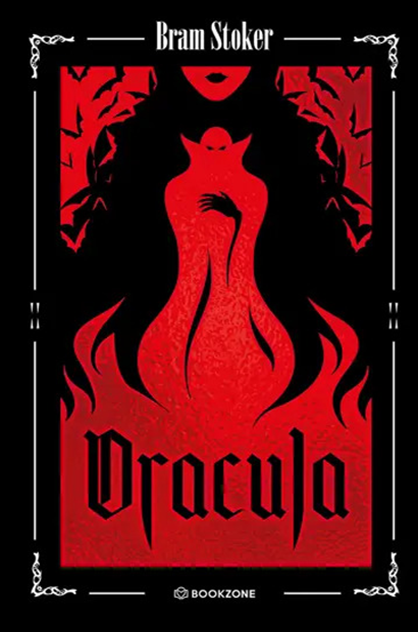
- Rating: ★★★★☆
- Editura: Bookzone
- Traducere: Mihai-Dan Pavelescu
- Pagini: 560
- Goodreads: Dracula
- Poate fi cumpărată de aici: https://bookzone.ro/carte/dracula-editie-hardcover-2026-bkz
Spre rușinea mea, „Dracula” de Bram Stoker este una dintre acele cărți clasice pe care le-am avut pe listă o perioadă foarte lungă, dar pe care am continuat să le amân. Am auzit atât de multe despre această poveste de-a lungul anilor, am întâlnit nenumărate referințe la celebrul conte și am văzut cât de mult a influențat acesta literatura și cinematografia, încât aveam impresia că, într-un fel, cunosc deja povestea. Cu toate acestea, nu ajunsesem niciodată să citesc romanul în sine. Mereu apărea altceva, o altă carte îmi atrăgea atenția și îmi spuneam că voi reveni la el atunci când voi simți că este momentul potrivit. Până la urmă, ce perioadă putea fi mai potrivită decât luna octombrie, cu serile ei mai răcoroase și Halloweenul tot mai aproape? Așa că mi-am făcut curaj și, de data aceasta, nu am mai găsit nicio scuză pentru a amâna lectura.
Romanul a fost publicat în 1897 și este una dintre cele mai cunoscute opere ale literaturii gotice, contribuind enorm la felul în care ne imaginăm astăzi vampirii. Bram Stoker a construit o poveste în care Transilvania, castelele izolate, nopțile întunecate și superstițiile vechi se împletesc cu atmosfera Angliei victoriene. Mi se pare interesant cum un personaj născut în paginile unei cărți a ajuns să depășească atât de mult granițele literaturii, devenind o adevărată legendă. Numele lui Dracula este cunoscut chiar și de cei care nu au citit romanul, iar imaginea contelui a fost reinterpretată de atât de multe ori, încât a devenit aproape imposibil să ne gândim la vampiri fără să ne vină în minte acest personaj. Totuși, dincolo de toate filmele și poveștile inspirate de el, mi-am dorit să descopăr și versiunea originală, cea care a dat naștere acestui univers întunecat.
Povestea începe cu Jonathan Harker, un tânăr avocat englez care călătorește în Transilvania pentru a se întâlni cu un client misterios, contele Dracula. Acesta urmează să cumpere o proprietate în Anglia, iar Jonathan trebuie să îl ajute cu formalitățile necesare. La început, călătoria pare una profesională, însă atmosfera locului și comportamentul oamenilor pe care îi întâlnește îi dau treptat motive de îngrijorare. Localnicii se tem de destinația lui, îl avertizează să nu își continue drumul și par să știe lucruri pe care el nu le poate înțelege. Cu toate acestea, Jonathan ajunge la castelul contelui, unde este întâmpinat de o gazdă politicoasă, dar stranie. Pe măsură ce zilele trec, își dă seama că nu este un simplu oaspete și că locul în care se află ascunde secrete înspăimântătoare. Castelul devine o închisoare din care încearcă să scape, iar întâlnirile sale cu Dracula îl fac să înțeleagă că are de-a face cu o ființă care nu respectă regulile lumii în care trăiește.
Recunosc că începutul mi-a plăcut foarte mult. Bram Stoker știe să construiască tensiunea fără să dezvăluie totul de la primele pagini, iar experiența lui Jonathan este un bun exemplu în acest sens. Există ceva neliniștitor în felul în care lucrurile aparent obișnuite încep să capete o semnificație amenințătoare. Un gest, o privire sau un detaliu legat de comportamentul contelui sunt suficiente pentru a-ți da de înțeles că ceva nu este în regulă. Mi-au plăcut în special descrierile castelului și ale împrejurimilor, pentru că sunt suficient de vizuale încât să îți poți imagina locul și să simți izolarea personajului. Transilvania capătă aici o aură misterioasă, aproape desprinsă de realitate, iar imaginea unui castel ascuns printre munți, în care se petrec lucruri inexplicabile, se potrivește perfect cu atmosfera romanului. În plus, faptul că povestea este plasată într-o perioadă în care oamenii aveau cu totul alte cunoștințe despre anumite fenomene face ca spaima și nesiguranța personajelor să pară cu atât mai firești.
După partea petrecută în Transilvania, acțiunea se mută treptat în Anglia, unde o întâlnim pe Mina Murray, logodnica lui Jonathan, și pe prietena ei, Lucy Westenra. Mina mi s-a părut un personaj interesant, mai ales datorită inteligenței, atenției la detalii și implicării sale în tot ceea ce se întâmplă. Nu este genul de personaj care să rămână pur și simplu pe margine, așteptând ca ceilalți să rezolve lucrurile în locul ei. Dimpotrivă, încearcă să adune informații, să înțeleagă situațiile și să îi ajute pe cei din jur. Lucy, în schimb, are o personalitate mai delicată și mai jucăușă, iar relația ei cu Mina ne oferă o imagine a vieții lor înainte ca întunericul să pătrundă în această lume aparent liniștită. Situația se schimbă atunci când Lucy începe să se simtă tot mai rău, fără ca cei din jur să găsească o explicație clară pentru starea ei. Slăbiciunea inexplicabilă, urmele misterioase și schimbările prin care trece devin sursa unei neliniști tot mai mari. Mi-a plăcut felul în care autorul construiește treptat această parte a poveștii, lăsându-ne să descoperim împreună cu personajele că amenințarea din castelul îndepărtat nu a rămas acolo.
Un rol important îl are și doctorul Van Helsing, un personaj care aduce în poveste atât cunoștințe medicale, cât și o înțelegere mai profundă a fenomenelor pe care ceilalți încearcă să le explice prin rațiune. Este un om hotărât, curajos și dispus să accepte posibilitatea ca răul cu care se confruntă să nu poată fi explicat prin mijloace obișnuite. Alături de el se află Arthur Holmwood, logodnicul lui Lucy, doctorul John Seward și Quincey Morris. Fiecare are propria personalitate și propriul mod de a reacționa în fața pericolului, însă ajung să colaboreze atunci când înțeleg că au de-a face cu un adversar neobișnuit. Mi-a plăcut această combinație de personaje, pentru că fiecare contribuie într-un fel la desfășurarea acțiunii. Unii încearcă să găsească explicații logice, alții se lasă ghidați de intuiție, iar ceilalți își găsesc curajul atunci când situația devine cu adevărat gravă. În felul acesta, lupta împotriva lui Dracula nu este doar povestea unui singur om care încearcă să învingă o creatură supranaturală, ci și povestea unui grup de oameni care învață să aibă încredere unii în alții și să își unească forțele.
Unul dintre aspectele care mi-au plăcut cel mai mult a fost modul în care Bram Stoker a ales să spună povestea. Romanul nu este construit în jurul unui singur narator, ci adună jurnale personale, scrisori, însemnări și alte documente prin care descoperim evenimentele. La început, am privit această structură ca pe o particularitate a epocii, însă, pe măsură ce am înaintat în lectură, am înțeles cât de bine se potrivește cu povestea. Fiecare personaj ne oferă propria perspectivă asupra întâmplărilor, iar informațiile se completează treptat. Uneori, ceea ce aflăm dintr-un jurnal capătă un alt sens atunci când citim scrisoarea unui alt personaj. Alteori, tocmai lipsa unor răspunsuri imediate menține misterul și te face să vrei să continui. Mi s-a părut o modalitate interesantă de a construi suspansul, pentru că avem impresia că adunăm dovezi și încercăm să înțelegem un caz alături de personaje. În plus, această formă de relatare oferă poveștii un aer aproape documentar, ca și cum evenimentele ar fi fost consemnate de oameni reali, care încearcă să păstreze o evidență a lucrurilor inexplicabile prin care au trecut.
Totuși, trebuie să vorbesc și despre aspectul care m-a deranjat puțin și care m-a făcut să nu îi ofer cinci stele. Înainte să încep cartea, mă așteptam ca Dracula să fie mult mai prezent în poveste, să îi descopăr mai bine gândurile, intențiile și personalitatea și să existe mai multe momente în care să fie personajul central al acțiunii. În realitate, o mare parte din roman este construită prin ochii celorlalte personaje, iar contele apare adesea indirect, prin ceea ce provoacă, prin urmele pe care le lasă și prin teama pe care o inspiră. Înțeleg că această alegere contribuie la misterul din jurul lui și că tocmai faptul că nu îl cunoaștem pe deplin îl face atât de înspăimântător. Cu toate acestea, mi-ar fi plăcut să petrec mai mult timp alături de el, să aflu mai multe despre felul în care gândește și să îi înțeleg mai bine motivațiile. Cred că o parte din dezamăgirea mea vine și din imaginea pe care mi-am format-o de-a lungul anilor despre acest personaj. Filmele, adaptările și toate poveștile inspirate de Dracula l-au transformat într-o figură atât de puternică a culturii populare, încât am pornit la drum cu anumite așteptări. Am descoperit însă că romanul original funcționează puțin diferit, punând accentul mai ales pe efectele pe care prezența contelui le are asupra celor din jur.
Cu toate acestea, nu pot spune că această alegere a autorului a stricat experiența lecturii. Dimpotrivă, pe măsură ce povestea avansează, devine tot mai clar cât de mare este influența lui Dracula asupra tuturor evenimentelor, chiar și atunci când nu se află efectiv în centrul scenei. El este amenințarea care îi aduce împreună pe ceilalți, forța care le pune la încercare convingerile și motivul pentru care trebuie să își depășească propriile limite. Iar faptul că povestea se desfășoară în mare parte prin intermediul celor care încearcă să îl înțeleagă și să îl oprească ne permite să vedem cât de greu este să te confrunți cu ceva ce nu poți explica pe deplin. În același timp, cred că trebuie să ținem cont de perioada în care a fost scris romanul. Publicat în 1897, „Dracula” a apărut într-o lume foarte diferită de cea în care trăim astăzi, iar multe dintre ideile și imaginile pe care le considerăm acum familiare au fost consolidate tocmai de această carte și de operele care i-au urmat. Privit din această perspectivă, romanul își arată mai bine importanța și meritele, chiar dacă unele aspecte pot fi percepute diferit de cititorul contemporan.
Un alt lucru care mi-a plăcut a fost felul în care autorul folosește descrierile pentru a crea o atmosferă apăsătoare. Întunericul, vremea neprielnică, spațiile izolate și peisajele misterioase nu sunt simple elemente de decor, ci contribuie la senzația permanentă că personajele se află în pericol. Mi-am putut imagina foarte ușor castelul contelui, drumurile prin munți, nopțile în care nimeni nu pare să fie în siguranță și locurile în care personajele încearcă să găsească răspunsuri. Chiar dacă ritmul nu este mereu la fel de alert și există pasaje în care acțiunea încetinește, atmosfera rămâne unul dintre punctele forte ale cărții. Romanul reușește să îți dea fiori nu neapărat prin scene șocante, ci prin așteptarea acelui lucru rău despre care simți că urmează să se întâmple. Este genul de groază care se construiește încet, prin incertitudine, prin detalii neliniștitoare și prin senzația că există ceva ascuns dincolo de ceea ce personajele pot vedea sau înțelege. Iar dacă ne gândim la perioada în care a fost scrisă cartea, mi se pare cu atât mai impresionant că Bram Stoker a reușit să creeze o poveste care încă poate trezi asemenea emoții.
În final, mă bucur tare mult că am reușit să citesc „Dracula” și că am bifat, în sfârșit, un titlu atât de important din literatura universală. Nu a fost o lectură perfectă pentru mine și nici nu a corespuns în totalitate imaginii pe care o aveam înainte să deschid cartea, însă mi-a oferit o experiență interesantă și m-a ajutat să înțeleg mai bine de unde a pornit fascinația pentru acest personaj. În spatele contelui care a devenit un simbol al groazei moderne se află o poveste despre frică, curaj, loialitate și lupta împotriva unui rău care pare imposibil de învins. Transilvania lui Bram Stoker rămâne un loc învăluit în mister, iar legenda celui care nu are reflexie în oglindă continuă să își facă simțită prezența în imaginația cititorilor, chiar și la mai bine de un secol de la publicarea romanului. Cred că acesta este unul dintre motivele pentru care „Dracula” continuă să fie citită și redescoperită: dincolo de toate reinterpretările moderne, povestea originală are încă suficientă forță pentru a ne transporta într-o lume în care superstițiile devin realitate, iar întunericul ascunde lucruri pe care nu suntem întotdeauna pregătiți să le înfruntăm.
Recomand „Dracula” celor care iubesc literatura gotică, poveștile cu vampiri și romanele în care misterul se construiește treptat. Cred că merită citită măcar o dată, mai ales de cei care cunosc personajul din filme, dar nu au descoperit încă povestea lui Bram Stoker. Iar dacă, asemenea mie, ați tot amânat această lectură, luna octombrie poate fi un moment foarte bun să îi acordați, în sfârșit, o șansă.

Dracula – Bram Stoker
To my shame, Bram Stoker’s „Dracula” is one of those classic books that has been on my TBR for a very long time, yet I kept putting it off. Over the years, I had heard so much about this story, come across countless references to the famous Count, and seen just how much he had influenced literature and cinema that I felt as though I already knew the story in a way. And yet, I had never actually read the novel itself. There was always something else to read, another book that caught my attention, and I kept telling myself I would get back to it when the time felt right. After all, what better time could there be than October, with its chilly evenings and Halloween just around the corner? So I finally gathered the courage to pick it up, and this time, I couldn’t find any more excuses to put it off.
First published in 1897, the novel is one of the best-known works of Gothic literature and played a huge role in shaping the way we imagine vampires today. Bram Stoker created a story in which Transylvania, isolated castles, dark nights, and ancient superstitions blend with the atmosphere of Victorian England. I find it fascinating how a character born within the pages of a book has managed to reach so far beyond the boundaries of literature, becoming a true legend in his own right. Even people who have never read the novel know the name Dracula, and the Count has been reimagined so many times that it has become almost impossible to think about vampires without picturing this character. Still, beyond all the films and stories inspired by him, I wanted to discover the original version for myself, the one that gave birth to this dark and mysterious world.
The story begins with Jonathan Harker, a young English solicitor who travels to Transylvania to meet a mysterious client, Count Dracula. The Count intends to purchase a property in England, and Jonathan is there to help him with the necessary paperwork. At first, the journey seems like an ordinary professional assignment, but the atmosphere of the place and the behaviour of the people he encounters gradually give him reasons to worry. The locals are frightened by his destination, warn him against continuing his journey, and seem to know things he cannot understand. Despite their warnings, Jonathan eventually reaches the Count’s castle, where he is welcomed by a polite but rather strange host. As the days go by, he realises that he is not simply a guest and that the place he has found himself in hides some truly terrifying secrets. The castle becomes a prison from which he desperately tries to escape, and his encounters with Dracula make him realise that he is dealing with a creature that does not abide by the rules of the world he knows.
I have to admit that I really enjoyed the beginning. Bram Stoker knows how to build tension without revealing everything from the very first pages, and Jonathan’s experience is a great example of this. There is something unsettling about the way seemingly ordinary things gradually take on a threatening meaning. A gesture, a look, or a small detail in the Count’s behaviour is enough to make you realise that something is not right. I particularly enjoyed the descriptions of the castle and its surroundings because they are vivid enough to help you picture the setting and feel just how isolated Jonathan is. Transylvania takes on a mysterious, almost otherworldly quality, and the image of a castle hidden among the mountains, where inexplicable things happen, fits the atmosphere of the novel perfectly. On top of that, the fact that the story takes place in a time when people had very different understandings of certain phenomena makes the characters’ fear and uncertainty feel all the more natural.
After the events in Transylvania, the story gradually shifts to England, where we meet Mina Murray, Jonathan’s fiancée, and her friend Lucy Westenra. I found Mina particularly interesting because of her intelligence, attention to detail, and involvement in everything that happens. She is not the kind of character who simply stands on the sidelines, waiting for others to solve everything for her. Instead, she tries to gather information, make sense of situations, and help the people around her. Lucy, on the other hand, has a more delicate and playful personality, and her friendship with Mina gives us a glimpse into their lives before darkness begins to creep into their seemingly peaceful world. Things take a turn when Lucy starts feeling increasingly unwell, with no clear explanation for her condition. Her inexplicable weakness, mysterious marks, and the changes she goes through become a growing source of concern. I enjoyed the way the author gradually develops this part of the story, allowing us to discover alongside the characters that the threat lurking in the distant castle has not stayed there.
Doctor Van Helsing also plays an important role in the story, bringing not only medical knowledge but also a deeper understanding of the phenomena the others are desperately trying to explain through reason alone. He is determined, courageous, and willing to accept the possibility that the evil they are facing cannot be explained through ordinary means. Alongside him are Arthur Holmwood, Lucy’s fiancé, Dr John Seward, and Quincey Morris. Each has a distinct personality and their own way of reacting to danger, but they eventually learn to work together when they realise they are facing an extraordinary opponent. I enjoyed this combination of characters because each of them contributes something to the story. Some try to find logical explanations, others rely on their intuition, while others discover their courage when things become truly serious. In this way, the fight against Dracula is not simply the story of one man trying to defeat a supernatural creature, but also the story of a group of people learning to trust one another and join forces.
One of the things I enjoyed most was Bram Stoker’s choice of storytelling. The novel is not built around a single narrator but brings together personal diaries, letters, journal entries, and other documents through which we gradually discover what has happened. At first, I saw this structure as a characteristic of the period in which the book was written, but as I continued reading, I began to understand just how well it suited the story. Each character offers their own perspective on events, and the pieces of the puzzle gradually fall into place. Sometimes, something we learn from one diary takes on a different meaning when we read another character’s letter. At other times, the lack of immediate answers is precisely what keeps the mystery alive and makes you want to read on. I found this an interesting way of building suspense because it feels as though we are gathering evidence and trying to solve a case alongside the characters. This format also gives the story an almost documentary-like quality, as if the events had been recorded by real people trying to keep track of the inexplicable experiences they had been through.
However, I also have to mention the one thing that bothered me a little and ultimately kept me from giving the book five stars. Before starting it, I expected Dracula to have a much greater presence in the story. I wanted to learn more about his thoughts, intentions, and personality, and I hoped there would be more moments in which he took centre stage. In reality, a large part of the novel unfolds through the eyes of the other characters, while the Count often appears indirectly, through the things he does, the traces he leaves behind, and the fear he inspires. I understand that this choice adds to the mystery surrounding him and that the fact we never fully get to know him is part of what makes him so frightening. Even so, I would have liked to spend more time with him, learn more about the way he thinks, and better understand his motivations. I think some of my disappointment also comes from the image of Dracula I had built up over the years. Films, adaptations, and all the stories inspired by him have turned him into such a powerful figure in popular culture that I started the book with certain expectations. What I discovered, however, was that the original novel works a little differently, focusing mainly on the effect the Count’s presence has on those around him.
Still, I cannot say that this particular choice ruined my reading experience. On the contrary, as the story progresses, it becomes increasingly clear just how much influence Dracula has over everything that happens, even when he is not physically at the centre of the action. He is the threat that brings the others together, the force that challenges their beliefs, and the reason they must push beyond their own limits. The fact that much of the story unfolds through the people trying to understand and stop him also allows us to see just how difficult it is to face something you cannot fully explain. At the same time, I think it is important to consider the period in which the novel was written. Published in 1897, „Dracula” appeared in a world very different from the one we live in today, and many of the ideas and images we now take for granted were popularised precisely by this book and the works that followed it. Seen from this perspective, the novel’s significance and merits become much clearer, even if some aspects may feel different to a modern reader.
Another thing I enjoyed was the way the author uses descriptions to create an oppressive atmosphere. The darkness, harsh weather, isolated settings, and mysterious landscapes are not simply background details; they all contribute to the constant feeling that the characters are in danger. I could easily picture the Count’s castle, the mountain roads, the nights when no one seems to be safe, and the places where the characters search for answers. Although the pacing is not always equally fast and there are passages where the action slows down, the atmosphere remains one of the book’s greatest strengths. The novel manages to send a chill down your spine not necessarily through shocking scenes, but through the anticipation of something terrible that you can feel is about to happen. It is the kind of horror that builds slowly, through uncertainty, unsettling details, and the sense that something lies hidden beyond what the characters can see or understand. Considering the period in which the book was written, I find it even more impressive that Bram Stoker managed to create a story that can still evoke such strong emotions.
In the end, I am really glad I finally got around to reading „Dracula” and was able to tick such an important title in world literature off my list. It was not a perfect reading experience for me, nor did it entirely match the image I had in mind before opening the book, but it was an interesting experience that helped me better understand where the fascination with this character began. Behind the Count who has become a symbol of modern horror lies a story about fear, courage, loyalty, and the struggle against an evil that seems impossible to defeat. Bram Stoker’s Transylvania remains shrouded in mystery, and the legend of the man who casts no reflection in the mirror continues to capture readers’ imaginations, even more than a century after the novel was published. I think this is one of the reasons Dracula continues to be read and rediscovered: beyond all the modern reinterpretations, the original story still has enough power to transport us to a world where superstition becomes reality and the darkness hides things we are not always prepared to face.
I would recommend „Dracula” to anyone who enjoys Gothic literature, vampire stories, and novels in which the mystery unfolds gradually. I think it is worth reading at least once, especially if you know the character from films but have yet to discover Bram Stoker’s original story. And if, like me, you have been putting off this book for ages, October might be the perfect time to finally give it a chance.
