
- Rating: ★★★☆☆
- Editura: Trei, imprint Fiction Connection / Thriller
- Traducere: Andreea Florescu
- Pagini: 368
- Goodreads: Dulce furie
- Poate fi cumpărată de aici: https://www.edituratrei.ro/carte/dulce-furie/13874/
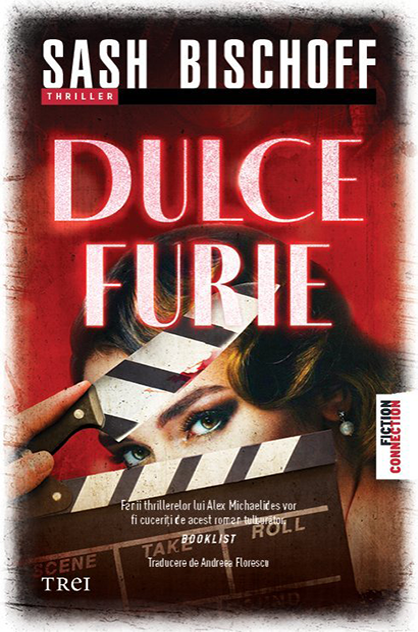
Aveam „Dulce furie” pe lista de lecturi de ceva timp și trebuie să recunosc că m-a atras încă de la început. În primul rând, coperta mi-a atras atenția, dar și sinopsisul mi s-a părut foarte interesant. Avea exact genul acela de poveste care îți promite secrete, personaje complicate, relații care nu sunt ceea ce par și un thriller psihologic care te ține în tensiune. Tocmai de aceea am început cartea cu destul de multă curiozitate și, probabil, cu așteptări mai mari decât ar fi trebuit. Deși îmi spun destul de des să nu pornesc la drum cu o carte având deja anumite așteptări foarte bine conturate, adevărul este că nu îmi iese mereu. Iar în cazul de față, cred că acest lucru a contribuit puțin și la dezamăgirea mea de la final.
Povestea o are în centrul ei pe Lila Crayne, o femeie care pare să aibă tot ceea ce și-ar putea dori cineva. Este frumoasă, fermecătoare, generoasă și foarte apreciată de cei din jur, fiind, într-un fel, imaginea femeii perfecte. Este logodită cu Kurt Royall, un regizor ambițios și vizionar, iar cei doi lucrează la adaptarea cinematografică a romanului „Blândețea nopții” de F. Scott Fitzgerald. Din exterior, viața Lilei pare aproape perfectă, însă lucrurile încep să se schimbe atunci când aceasta încearcă să intre cât mai bine în pielea personajului pe care urmează să îl interpreteze.
Pentru a se apropia de rol și pentru a înțelege mai bine traumele personajului, Lila începe să lucreze cu Jonah Gabriel, un psihoterapeut seducător și greu de descifrat. Relația dintre cei doi devine treptat una tot mai complicată, iar ședințele de terapie ajung să scoată la suprafață lucruri pe care Lila le-a ținut ascunse mult timp. Pe măsură ce începe să se confrunte cu trecutul ei, imaginea femeii care pare să aibă o viață perfectă începe să se destrame. Jonah pare să fie omul care o ajută să se reconstruiască, dar, pe parcurs, devine din ce în ce mai clar că nici el nu este tocmai cine pare.
Și, de fapt, acesta este unul dintre lucrurile pe care cartea încearcă cel mai mult să le transmită: nimeni nu este exact ceea ce pare. Fiecare personaj are propriile secrete, propriile răni și propria versiune asupra lucrurilor care s-au întâmplat. Relația dintre Lila, Kurt și Jonah este una dintre cele mai importante părți ale romanului, iar pe măsură ce adevărul începe să iasă la suprafață, granița dintre victimă și agresor devine din ce în ce mai greu de trasat. Cartea vorbește mult despre abuz, manipulare, traumă, putere și despre felul în care oamenii își construiesc propriile povești pentru a putea merge mai departe.
Mi s-a părut interesant și faptul că povestea este foarte legată de lumea filmului și de imaginea pe care oamenii o construiesc despre ei înșiși. Lila este, până la urmă, o femeie care joacă un rol atât pe ecran, cât și în viața de zi cu zi. Pe măsură ce trecutul ei este scos la lumină, devine tot mai greu de spus unde se termină personajul și unde începe omul adevărat. Kurt, la rândul lui, este genul de personaj care pare să aibă o viziune foarte clară asupra artei și a oamenilor din jurul său, însă ambiția lui ascunde și alte lucruri. Iar Jonah, deși apare inițial ca un sprijin pentru Lila, este probabil personajul care mi-a ridicat cele mai multe semne de întrebare. Nimic nu este simplu în relațiile dintre ei, iar tocmai această lipsă de siguranță este una dintre armele romanului.
Din păcate, aici am început eu să mă pierd. Cartea a pornit de la o premisă care mi s-a părut foarte bună și chiar eram curioasă să văd în ce direcție va merge. Pe parcurs însă, am avut tot mai des senzația că sunt prea multe lucruri de urmărit în același timp. Sunt foarte multe detalii, idei, perspective și situații care se adaugă una peste alta, iar la un moment dat am simțit că povestea se îndepărtează de ceea ce mă făcuse inițial curioasă. În loc să mă apropii tot mai mult de personaje și de misterul din jurul lor, am ajuns să mă întreb dacă mai înțeleg exact ce se întâmplă și unde vrea să ajungă povestea.
Cred că acesta a fost cel mai mare minus pentru mine. Nu pot spune că romanul nu are idei bune. Din contră, cred că are chiar foarte multe. Problema mea este că au fost atât de multe idei și direcții, încât nu toate au reușit să funcționeze împreună. Mi-aș fi dorit ca povestea să se concentreze puțin mai mult pe anumite aspecte și să lase altele în plan secund. Uneori aveam impresia că descopăr ceva care ar putea deveni foarte interesant, pentru ca apoi atenția să se mute în altă parte.
În același timp, mi se pare important să spun că acesta este un roman de debut, iar acest lucru poate explica într-o anumită măsură scriitura atât de bogată și dorința autoarei de a include foarte multe lucruri. Se simte că Sash Bischoff a avut multe idei pe care a vrut să le exploreze: trauma, abuzul, misoginia, răzbunarea, ambiția, imaginea publică, industria cinematografică, relațiile dintre bărbați și femei și felul în care ne construim propria identitate. Sunt teme interesante și destul de curajoase, însă pentru mine au devenit uneori prea multe. Au fost prea multe detalii și prea multe ipostaze ale personajelor pe care mi-a fost greu să le urmăresc și să le pun cap la cap.
Mi-a plăcut, totuși, faptul că romanul nu este unul previzibil. Autoarea încearcă să te facă să te răzgândești în privința personajelor și să privești fiecare situație dintr-o altă perspectivă. Când crezi că ai înțeles cine are dreptate și cine este vinovat, apare o informație nouă care schimbă puțin lucrurile. Iar finalul vine cu propriile lui surprize și încearcă să ofere o nouă perspectivă asupra întregii povești. Înțeleg de ce romanul a fost descris ca fiind întunecat, întortocheat și imprevizibil, pentru că exact aceasta este intenția lui.
Doar că, pentru mine, toate aceste răsturnări și schimbări nu au avut întotdeauna efectul dorit. În loc să mă țină permanent captivată, uneori m-au făcut să mă simt și mai confuză. Am ajuns să citesc mai mult pentru a afla cum se va termina povestea decât pentru că eram complet implicată în ceea ce se întâmpla cu personajele. Iar pentru un thriller psihologic, acesta este un lucru care cântărește destul de mult în experiența mea de lectură.
Un alt aspect care mi s-a părut interesant este felul în care cartea pune sub semnul întrebării ideea de „romantism” și relațiile de putere dintre personaje. Nu avem parte de relații simple, în care lucrurile sunt clar împărțite între bine și rău. Există multă manipulare, multă ambiție și multă nevoie de control. În spatele poveștii despre film și despre trecutul Lilei se află, de fapt, o discuție mai amplă despre felul în care femeile au fost privite și tratate, despre abuz și despre dorința de a-ți recâștiga controlul asupra propriei povești. Mi s-a părut o direcție bună și cred că este una dintre părțile care merită apreciate la roman.
Cu toate acestea, regret că „Dulce furie” nu a funcționat mai bine pentru mine. Poate că nici momentul în care am citit-o nu a fost cel mai potrivit, poate că am pornit cu prea multe așteptări sau poate că pur și simplu stilul acesta foarte încărcat nu este unul care să funcționeze pentru mine. Cert este că, după toate lucrurile pe care le auzisem despre carte și după cât de interesant mi se păruse sinopsisul, mă așteptam să îmi placă mai mult.
Nu pot spune că a fost o carte rea și nici că regret complet că am citit-o. Are o premisă interesantă, personaje complicate și câteva teme foarte bune, iar pentru un debut mi se pare o carte ambițioasă. Cred însă că ambiția aceasta a fost, în același timp, și punctul ei slab pentru mine. Sash Bischoff a vrut să spună foarte multe lucruri și să construiască o poveste cu mai multe straturi, dar eu am simțit că m-am pierdut printre ele.
Per total, pentru mine „Dulce furie” a fost o lectură de trei stele. Am apreciat ideea de la baza poveștii, atmosfera întunecată și felul în care autoarea a încercat să construiască personaje despre care nu poți spune cu ușurință că sunt bune sau rele. Mi-ar fi plăcut însă ca povestea să fie ceva mai clară și mai concentrată. Am început-o cu multă curiozitate și cu speranța că voi avea parte de un thriller psihologic care să mă surprindă, iar la final am rămas mai degrabă cu sentimentul că aș fi vrut să fie puțin altfel.
Poate că, pentru alți cititori, tocmai complexitatea, numeroasele detalii și toate schimbările de perspectivă vor fi punctele forte ale romanului. Pentru mine, însă, acestea au făcut lectura mai dificilă și m-au îndepărtat treptat de poveste. Este un debut curajos și ambițios, dar unul care, din păcate, nu a reușit să mă cucerească așa cum speram.

Sweet Fury – Sash Bischoff
I had „Sweet Fury” on my reading list for quite some time, and I have to admit that it caught my attention from the very beginning. First of all, the cover stood out to me, but I also found the synopsis very intriguing. It had exactly the kind of story that promises secrets, complicated characters, relationships that are not what they seem, and a psychological thriller that keeps you on edge. That is why I started the book with quite a lot of curiosity and, probably, with higher expectations than I should have had. Although I often tell myself not to start a book with very specific expectations already in mind, the truth is that I don’t always manage to do that. And in this case, I think that contributed somewhat to my disappointment in the end.
The story centers around Lila Crayne, a woman who seems to have everything anyone could possibly want. She is beautiful, charming, generous, and highly regarded by those around her, making her, in a way, the image of the perfect woman. She is engaged to Kurt Royall, an ambitious and visionary director, and the two of them are working on a film adaptation of F. Scott Fitzgerald’s „Tender Is the Night”. From the outside, Lila’s life seems almost perfect, but things begin to change when she tries to get as deeply as possible into the character she is going to play.
In order to get closer to the role and better understand the character’s traumas, Lila begins working with Jonah Gabriel, a seductive and difficult-to-read psychotherapist. Their relationship gradually becomes more and more complicated, and the therapy sessions begin to bring to the surface things Lila has kept hidden for a long time. As she starts confronting her past, the image of the woman who seems to have a perfect life begins to fall apart. Jonah appears to be the person helping her rebuild herself, but as the story progresses, it becomes increasingly clear that he is not exactly who he seems to be either.
And, in fact, this is one of the main things the book tries to convey: no one is exactly who they appear to be. Every character has their own secrets, their own wounds, and their own version of what happened. The relationship between Lila, Kurt, and Jonah is one of the most important parts of the novel, and as the truth begins to emerge, the line between victim and abuser becomes increasingly difficult to draw. The book explores abuse, manipulation, trauma, power, and the ways in which people create their own narratives in order to move forward.
I also found it interesting that the story is so closely connected to the world of film and to the image people create of themselves. Lila is, after all, a woman who plays a role both on screen and in her everyday life. As her past is brought to light, it becomes increasingly difficult to tell where the character ends and the real person begins. Kurt, in turn, is the kind of character who seems to have a very clear vision of art and of the people around him, but his ambition hides other things as well. And Jonah, although he initially appears to be a source of support for Lila, is probably the character who raised the most questions for me. Nothing is simple in their relationships, and this very lack of certainty is one of the novel’s strongest weapons.
Unfortunately, this is where I started to lose my way. The book began with a premise that I thought was very promising, and I was genuinely curious to see where it would go. As I continued reading, however, I increasingly felt that there were too many things to keep track of at the same time. There are so many details, ideas, perspectives, and situations layered on top of one another that, at some point, I felt the story was moving away from what had initially made me curious. Instead of feeling increasingly drawn into the characters and the mystery surrounding them, I found myself wondering whether I still fully understood what was happening and where the story was trying to go.
I think this was the biggest downside for me. I can’t say that the novel doesn’t have good ideas. On the contrary, I think it has a lot of them. My problem is that there were so many ideas and different directions that not all of them managed to work well together. I would have preferred the story to focus a little more on certain aspects while keeping others in the background. Sometimes I felt that I was discovering something that could become very interesting, only for the focus to shift somewhere else.
At the same time, I think it is important to mention that this is a debut novel, and that may partly explain the very rich writing and the author’s desire to include so many different elements. You can tell that Sash Bischoff had many ideas she wanted to explore: trauma, abuse, misogyny, revenge, ambition, public image, the film industry, relationships between men and women, and the way we construct our own identities. These are interesting and fairly bold themes, but for me, they sometimes became too much. There were too many details and too many different sides to the characters that I found difficult to follow and piece together.
I did, however, appreciate the fact that the novel is not predictable. The author tries to make you reconsider your opinions about the characters and look at each situation from a different perspective. Just when you think you understand who is right and who is to blame, a new piece of information appears and changes things slightly. The ending also comes with its own surprises and attempts to offer a new perspective on the entire story. I understand why the novel has been described as dark, twisted, and unpredictable, because that is clearly what it is aiming for.
The problem is that, for me, all these twists and changes did not always have the desired effect. Instead of keeping me completely captivated, they sometimes left me even more confused. I found myself reading more to find out how the story would end than because I was fully invested in what was happening to the characters. And for a psychological thriller, that weighs quite heavily on my reading experience.
Another aspect I found interesting is the way the book questions the idea of “romance” and the power dynamics between the characters. We don’t get simple relationships where things are clearly divided into good and evil. There is a great deal of manipulation, ambition, and the need for control. Behind the story about the film and Lila’s past lies, in fact, a broader discussion about the way women have been viewed and treated, about abuse, and about the desire to regain control over your own story. I thought this was a strong direction, and I think it is one of the aspects of the novel that deserves to be appreciated.
Even so, I regret that „Sweet Fury” did not work better for me. Maybe the timing wasn’t right, maybe I went into it with too many expectations, or maybe this very dense style simply isn’t one that works for me. What I do know is that, after everything I had heard about the book and after finding the synopsis so intriguing, I expected to like it much more.
I can’t say that it was a bad book, nor do I regret reading it completely. It has an interesting premise, complicated characters, and some very good themes, and for a debut, I think it is an ambitious book. I do, however, think that this ambition was also its weakest point for me. Sash Bischoff wanted to say a lot of things and build a multi-layered story, but I felt that I got lost among all those layers.
Overall, „Sweet Fury” was a three-star read for me. I appreciated the idea at the heart of the story, the dark atmosphere, and the way the author tried to create characters that you can’t easily categorize as either good or bad. I just wish the story had been a little clearer and more focused. I started it with a lot of curiosity and the hope that I would get a psychological thriller that would surprise me, but by the end, I was left with more of a feeling that I wished it had been a little different.
Perhaps, for other readers, the complexity, the numerous details, and all the shifts in perspective will be the novel’s strengths. For me, however, these elements made the reading experience more difficult and gradually pulled me away from the story. It is a bold and ambitious debut, but unfortunately, one that did not manage to win me over in the way I had hoped.
