
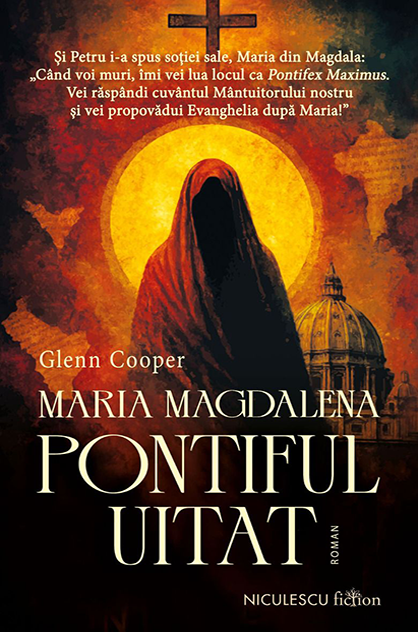
- Rating: ★★★★☆
- Editura: Niculescu, imprint Fiction / Noir
- Traducere: Timea Kovacs
- Pagini: 368
- Goodreads: Maria Magdalena, Pontiful uitat
- Poate fi cumpărată de aici: https://www.niculescu.ro/maria-magdalena-pontiful-uitat.html
„Maria Magdalena, Pontiful uitat” de Glenn Cooper este genul de thriller pe care l-am început fără să știu exact la ce să mă aștept și care, în cele din urmă, m-a surprins într-un mod plăcut. Nu sunt, de obicei, o cititoare atrasă de cărțile care au ca temă principală religia, însă aici povestea este construită mai degrabă în jurul unui mister istoric, al unor secrete care trebuie ascunse și al unei conspirații ce poate schimba modul în care este privită istoria creștinismului. Tocmai această combinație de mister, acțiune și elemente istorice a făcut lectura mai interesantă decât mă așteptam.
Punctul de plecare al poveștii este foarte interesant: într-o mască funerară este descoperit un fragment de papirus antic care conține o informație greu de acceptat și, cu atât mai mult, greu de făcut publică. Papirusul ar putea demonstra că Maria Magdalena nu a fost doar una dintre figurile importante ale creștinismului timpuriu, ci că ar fi ocupat chiar poziția de papă. Dacă această informație ar deveni cunoscută, ar putea schimba o parte importantă din istoria Bisericii. De aici începe o cursă contra cronometru, pentru că există persoane care sunt dispuse să facă orice pentru ca adevărul să nu iasă la lumină. Avem, astfel, un mister pornit de la un document vechi, un secret pe care cineva încearcă să îl distrugă și un trecut care amenință să răstoarne ceea ce se credea cunoscut.
Mi-a plăcut și faptul că romanul nu se limitează la misterul papirusului, ci aduce în discuție și discriminarea femeilor, de această dată în interiorul Bisericii. Ideea mi s-a părut una dintre cele mai interesante componente ale cărții, deoarece pornește de la o întrebare care poate schimba complet perspectiva asupra unor evenimente istorice: ce s-ar întâmpla dacă o femeie ar fi avut, într-o perioadă în care acest lucru pare imposibil, una dintre cele mai importante poziții din lumea creștină? Glenn Cooper folosește această premisă pentru a construi nu doar un thriller, ci și o poveste despre putere, credință, secrete și felul în care anumite adevăruri pot fi ascunse atunci când amenință instituții puternice.
Personajele mi s-au părut destul de bine integrate în poveste, deși nu aș spune că sunt construite în mod foarte profund. În mare parte, ajungem să le cunoaștem prin ceea ce spun, prin alegerile pe care le fac și, mai ales, prin interacțiunile lor cu celelalte personaje. Nu avem neapărat parte de portrete psihologice foarte elaborate, dar pe măsură ce acțiunea avansează putem să ne formăm o imagine despre fiecare dintre ele. Unele personaje sunt motivate de dorința de a descoperi adevărul, în timp ce altele sunt gata să îl ascundă cu orice preț. Tocmai aceste perspective diferite creează tensiunea din poveste.
Unul dintre lucrurile care m-au făcut să continui lectura a fost ritmul. Acțiunea este destul de alertă și apar constant informații, pericole sau situații care te fac curios să vezi ce urmează. Nu este genul de carte în care să simți că lucrurile stagnează prea mult. Chiar dacă unele aspecte ar fi putut fi dezvoltate mai mult, misterul central este suficient de puternic încât să te facă să întorci pagină după pagină pentru a afla unde va duce totul. Mi-a plăcut în special senzația de „ce se va întâmpla acum?”, pe care cartea reușește să o păstreze în mare parte din timpul lecturii.
Totuși, spre final am avut impresia că lucrurile se desfășoară puțin prea repede. După ce tensiunea este construită pe parcursul romanului, rezolvarea crizei mi s-a părut grăbită. Mi-ar fi plăcut ca autorul să acorde mai mult spațiu consecințelor și să explice ce se întâmplă după momentul în care problema principală este rezolvată. Simțeam că povestea mai avea câteva lucruri de spus și că anumite urmări ale evenimentelor ar fi meritat să fie explorate mai pe larg. Pentru mine, acesta a fost principalul minus al cărții.
Un alt lucru pe care l-am descoperit abia după ce am terminat romanul a fost că „Maria Magdalena, Pontiful uitat” este volumul al șaselea dintr-o serie. Mi s-a părut puțin surprinzător, mai ales pentru că am citit cartea separat, fără să fi parcurs volumele anterioare. Cred că experiența ar fi fost diferită dacă aș fi citit întreaga serie în ordine. Probabil aș fi înțeles mai bine personajele, evoluția lor și felul în care se leagă această poveste de celelalte cărți. Tocmai de aceea, după ce am aflat acest lucru, am rămas cu impresia că poate ar fi fost mai interesant să descopăr mai întâi stilul lui Glenn Cooper și universul seriei de la început.
Chiar dacă nu sunt în mod normal atrasă de romanele cu teme religioase, am găsit aici suficient mister și suficientă acțiune pentru ca acest aspect să nu mă deranjeze. De fapt, cred că tocmai faptul că povestea pornește de la o idee atât de controversată o face interesantă. Un papirus antic care ar putea demonstra existența unui papă uitat, o informație pe care cineva încearcă cu disperare să o distrugă și posibilitatea ca această descoperire să schimbe istoria creștinismului sunt ingrediente foarte potrivite pentru un thriller.
În anumite momente, cartea mi-a amintit de genul de povești pe care le-aș asocia cu romanele lui Dan Brown: documente vechi, mistere religioase, instituții care ascund secrete, conspirații și personaje prinse într-o cursă pentru aflarea adevărului. Nu spun că stilul celor doi autori este identic, însă cititorii care se bucură de romane în care istoria, religia și misterul se întâlnesc cu acțiunea cred că vor găsi aici elemente familiare și atractive. Este, de asemenea, genul de poveste care amintește pe alocuri de aventurile clasice cu indicii ascunse și secrete istorice, motiv pentru care mi se pare o alegere potrivită pentru fanii thrillerelor de acțiune și ai poveștilor cu conspirații.
Per total, pentru mine „Maria Magdalena, Pontiful uitat” a fost o lectură mai interesantă decât mă așteptam. Nu cred că este o carte perfectă, iar personajele ar fi putut fi dezvoltate mai mult, în timp ce finalul mi s-a părut prea grăbit. În schimb, ideea de bază este foarte bună, acțiunea se mișcă repede, iar misterul papirusului este suficient de captivant pentru a te face să continui lectura. Mi-a plăcut și faptul că romanul ridică problema locului femeilor în cadrul Bisericii și a modului în care anumite adevăruri pot fi ascunse pentru a proteja o anumită versiune a istoriei.
O recomand în special celor care iubesc thrillerele istorice, misterele religioase și poveștile despre documente pierdute, conspirații și adevăruri care ar putea schimba istoria. Dacă v-au plăcut romanele lui Dan Brown și vă atrag poveștile în care un secret vechi ajunge să pună în pericol prezentul, cred că „Maria Magdalena, Pontiful uitat” merită să fie pe lista voastră de lecturi.


The Lost Pope – Glenn Cooper (Cal Donovan, #6)
“The Lost Pope” by Glenn Cooper is the kind of thriller I started without knowing exactly what to expect, and which ultimately surprised me in a pleasant way. I am not usually a reader who is drawn to books whose main theme is religion, but here the story is built more around a historical mystery, secrets that need to be kept hidden, and a conspiracy that could change the way the history of Christianity is viewed. This combination of mystery, action, and historical elements made the reading experience more interesting than I expected.
The starting point of the story is very intriguing: an ancient papyrus fragment is discovered inside a funerary mask, containing information that is difficult to accept and, even more so, difficult to make public. The papyrus could prove that Mary Magdalene was not only one of the important figures of early Christianity, but that she may actually have held the position of pope. If this information were to become known, it could change a significant part of the history of the Church. From this point on, the story becomes a race against time, because there are people who are willing to do anything to prevent the truth from coming to light. We therefore have a mystery that begins with an ancient document, a secret that someone is trying to destroy, and a past that threatens to overturn what was believed to be known.
I also liked the fact that the novel does not focus solely on the mystery surrounding the papyrus, but also addresses the discrimination against women, this time within the Church. I found this to be one of the most interesting aspects of the book, because it starts from a question that can completely change the way we look at certain historical events: what would happen if a woman had held, during a period when such a thing seemed impossible, one of the most important positions in the Christian world? Glenn Cooper uses this premise to create not only a thriller, but also a story about power, faith, secrets, and the way certain truths can be hidden when they threaten powerful institutions.
The characters seemed fairly well integrated into the story, although I would not say that they are developed in great depth. For the most part, we get to know them through what they say, the choices they make, and, above all, their interactions with the other characters. We do not necessarily get very elaborate psychological portraits, but as the story progresses, we can form an impression of each of them. Some characters are motivated by the desire to discover the truth, while others are willing to hide it at any cost. It is precisely these different perspectives that create the tension in the story.
One of the things that made me want to keep reading was the pacing. The action is quite fast-paced, and there are constantly new pieces of information, dangers, or situations that make you curious to see what will happen next. It is not the kind of book where you feel that things are dragging for too long. Even though some aspects could have been developed further, the central mystery is strong enough to make you turn page after page to find out where everything is heading. I particularly enjoyed the feeling of “what is going to happen now?” that the book manages to maintain for most of the reading experience.
However, towards the end, I felt that things moved a little too quickly. After the tension had been building throughout the novel, the resolution of the crisis seemed rushed to me. I would have liked the author to give more space to the consequences and to explain what happens after the main problem is resolved. I felt that the story still had a few things left to say and that some of the aftermath of the events deserved to be explored in greater detail. For me, this was the book’s main weakness.
Another thing I only discovered after finishing the novel was that “The Lost Pope” is the sixth book in a series. I found this a little surprising, especially because I read the book on its own, without having read the previous volumes. I think the experience would have been different if I had read the entire series in order. I probably would have understood the characters, their development, and the way this story connects to the other books much better. That is why, after finding this out, I was left with the impression that it might have been more interesting to discover Glenn Cooper’s style and the world of the series from the very beginning.
Even though I am not normally attracted to novels with religious themes, I found enough mystery and action here for that aspect not to bother me. In fact, I think the fact that the story is based on such a controversial idea is precisely what makes it interesting. An ancient papyrus that could prove the existence of a forgotten pope, information that someone is desperately trying to destroy, and the possibility that this discovery could change the history of Christianity are all ingredients that work very well in a thriller.
At certain points, the book reminded me of the kind of stories I would associate with Dan Brown’s novels: ancient documents, religious mysteries, institutions hiding secrets, conspiracies, and characters caught up in a race to uncover the truth. I am not saying that the two authors have identical styles, but readers who enjoy novels where history, religion, and mystery come together with action will probably find familiar and appealing elements here. It is also the kind of story that occasionally brings to mind classic adventures involving hidden clues and historical secrets, which is why I think it is a good choice for fans of action thrillers and conspiracy stories.
Overall, “The Lost Pope” was a more interesting read for me than I expected. I do not think it is a perfect book, and the characters could have been developed more, while the ending felt too rushed to me. On the other hand, the basic premise is very good, the action moves quickly, and the mystery surrounding the papyrus is captivating enough to keep you reading. I also liked the fact that the novel raises questions about the place of women within the Church and about the way certain truths can be hidden in order to protect a particular version of history.
I would especially recommend it to readers who love historical thrillers, religious mysteries, and stories about lost documents, conspiracies, and truths that could change history. If you enjoyed Dan Brown’s novels and are drawn to stories in which an ancient secret eventually puts the present at risk, I think “The Lost Pope” is worth adding to your reading list.
