
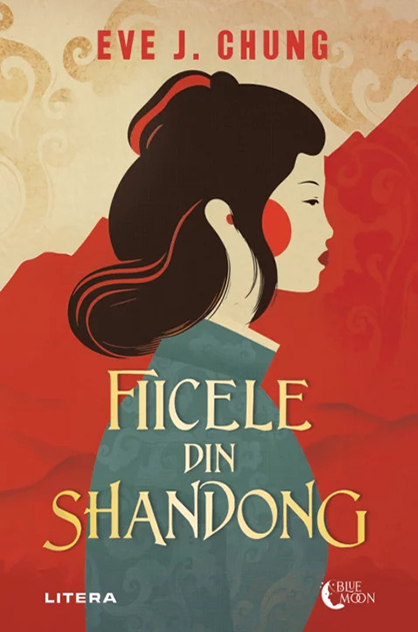
- Rating: ★★★★★
- Editura: Litera, imprint Blue Moon
- Traducere: Daniela Purgaru
- Pagini: 384
- Goodreads: Fiicele din Shandong
- Poate fi cumpărată de aici: https://www.litera.ro/fiicele-din-shandong-afbm277
„Fiicele din Shandong” de Eve J. Chung a fost una dintre cele mai frumoase surprize literare pe care le-am avut în ultima perioadă. Am început această carte fără a avea așteptări foarte mari, însă, pe măsură ce am înaintat în poveste, mi-am dat seama că este una dintre acele lecturi care rămân cu tine mult timp după ce ai întors ultima pagină. M-a impresionat profund prin emoțiile pe care le transmite și prin felul în care reușește să spună o poveste atât de dureroasă, dar în același timp atât de plină de speranță.
Acțiunea se petrece în anul 1948, în timpul Războiului Civil din China. În provincia Shandong, familia Ang, o familie bogată de moșieri, este mai preocupată de faptul că nu are un moștenitor de sex masculin decât de haosul care cuprinde întreaga țară. În această familie, fiicele sunt considerate o povară, iar simplul fapt că mama lor a adus pe lume patru fete este suficient pentru ca ea să fie umilită și tratată cu cruzime. Romanul vorbește foarte mult despre discriminarea femeilor și despre felul în care acestea sunt privite ca fiind inferioare bărbaților, indiferent cât de mult muncesc sau cât de multe sacrificii fac. Este o realitate greu de citit, dar prezentată într-un mod atât de autentic încât nu ai cum să nu empatizezi cu personajele.
Hai, fiica cea mare, este un personaj pe care l-am admirat enorm. Deși este încă foarte tânără, își asumă responsabilitatea de a avea grijă de surorile ei și încearcă mereu să le protejeze. Este matură, curajoasă și dispusă să îndure orice pentru familia sa. Di, sora ei mai mică, are o personalitate diferită, fiind mai isteață și găsind mereu metode prin care să scape de obligațiile impuse. Mama lor este, poate, unul dintre cele mai triste personaje. După ani întregi de umilințe și abuzuri doar pentru că nu a născut un băiat, încearcă să-și păstreze demnitatea prin mici gesturi de revoltă, iar iubirea pe care le-o poartă fiicelor sale este impresionantă.
În momentul în care armata comunistă se apropie, restul familiei Ang fuge pentru a se salva, abandonându-le pe cele patru fete și pe mama lor, considerate doar niște guri în plus de hrănit. De aici începe adevărata lor luptă pentru supraviețuire. Pentru că bărbații familiei nu mai sunt de găsit, Hai este aleasă să plătească pentru presupusele greșeli ale familiei sale și trece prin momente de o cruzime greu de imaginat. După ce realizează că pericolul este departe de a se fi încheiat, cele cinci femei iau o decizie curajoasă: să fugă și să încerce să-și găsească familia care le-a abandonat. Fără bani, înfometate și nevoite să se descurce singure, își falsifică permise de călătorie și pornesc într-un drum de aproximativ 1600 de kilometri. Călătoria lor este plină de obstacole, teamă și suferință, dar și de momente care le demonstrează cât de puternice pot deveni atunci când sunt obligate să lupte pentru propria viață.
Mi-a plăcut foarte mult faptul că romanul nu vorbește doar despre război, ci și despre consecințele lui asupra oamenilor obișnuiți. Este o poveste despre pierderea casei, a siguranței și a familiei, despre foamete, frică și nedreptate, dar și despre curaj, reziliență și dorința de a merge mai departe. Pe măsură ce lasă în urmă tot ceea ce au cunoscut, aceste femei descoperă și ceva ce nu au avut niciodată cu adevărat: libertatea de a-și decide singure destinul și șansa de a-și construi o viață în care să nu mai fie definite doar de faptul că sunt femei.
Unul dintre cele mai mari puncte forte ale cărții este felul în care sunt construite personajele. Mi s-au părut extrem de reale, cu defecte, temeri și reacții credibile, ceea ce m-a făcut să mă atașez foarte repede de ele. Descrierile sunt foarte vii și detaliate, astfel încât am avut impresia că sunt alături de personaje în fiecare etapă a călătoriei lor. Stilul de scriere al autoarei este foarte cursiv și ușor de urmărit, fără să fie încărcat sau complicat, și reușește să transmită o mulțime de emoții. Am simțit o empatie profundă pentru femeile care au fost nedreptățite și obligate să îndure atâtea suferințe, dar în același timp am simțit multă furie și frustrare față de personajele care profitau de poziția și privilegiile lor, tratându-i pe ceilalți cu dispreț și cruzime.
„Fiicele din Shandong” este o lectură care m-a emoționat de la început până la sfârșit. Este o carte dureroasă, uneori chiar greu de parcurs din cauza subiectelor abordate, însă tocmai acest lucru o face atât de puternică și memorabilă. Vorbește despre război, despre discriminare, despre nedreptățile îndurate de femei și despre sacrificiile făcute de o mamă și fiicele ei pentru a supraviețui și pentru a-și păstra demnitatea. Este, în același timp, o poveste despre iubirea dintre surori, despre legătura dintre mamă și fiice și despre puterea de a merge mai departe chiar și atunci când totul pare pierdut. Pentru mine a fost o lectură de cinci stele, una pe care o voi recomanda cu mare drag tuturor celor care apreciază romanele istorice emoționante, cu personaje memorabile și povești care lasă o amprentă puternică asupra cititorului.


Daughters of Shandong – Eve J. Chung
„Daughters of Shandong” by Eve J. Chung was one of the most wonderful literary surprises I’ve had in a long time. I picked up this novel without particularly high expectations, but as I became immersed in the story, I realized it was one of those books that stays with you long after you’ve turned the final page. I was deeply moved by the emotions it conveys and by the way it tells such a heartbreaking story while still remaining full of hope.
The novel is set in 1948 during the Chinese Civil War. In Shandong Province, the Ang family, a wealthy landowning household, is far more concerned with the fact that they have no male heir than with the chaos engulfing the country. In this family, daughters are seen as a burden, and the simple fact that their mother has given birth to four girls is enough for her to be humiliated and subjected to relentless cruelty. The novel explores the discrimination faced by women and the way they are viewed as inferior to men, regardless of how hard they work or how many sacrifices they make. It is a difficult reality to read about, but it is portrayed so authentically that it is impossible not to empathize with the characters.
Hai, the eldest daughter, is a character I admired immensely. Although she is still very young, she takes on the responsibility of caring for her sisters and constantly tries to protect them. She is mature, courageous, and willing to endure anything for the sake of her family. Di, her younger sister, has a very different personality. She is clever, resourceful, and always finds ways to avoid the duties imposed upon her. Their mother is perhaps the most heartbreaking character of all. After years of humiliation and abuse simply because she did not give birth to a son, she struggles to preserve her dignity through small acts of defiance, and the love she has for her daughters is truly remarkable.
When the Communist army approaches, the rest of the Ang family flees to save themselves, abandoning the four girls and their mother, whom they see as nothing more than extra mouths to feed. This is where their true fight for survival begins. With the men of the family nowhere to be found, Hai is chosen to pay for her family’s supposed crimes and endures acts of cruelty that are almost unimaginable. Once they realize that the danger is far from over, the five women make a brave decision: they will flee and try to find the family that abandoned them. Penniless, starving, and forced to rely solely on one another, they forge travel permits and embark on a journey of nearly 1,600 kilometers. Their journey is filled with obstacles, fear, and suffering, but also with moments that reveal just how strong they can become when they are forced to fight for their lives.
One of the things I appreciated most about this novel is that it is not simply a story about war, but about its impact on ordinary people. It is a story of losing one’s home, security, and family; of famine, fear, and injustice; but also of courage, resilience, and the determination to keep moving forward. As they leave behind everything they have ever known, these women also discover something they have never truly had before: the freedom to decide their own fate and the opportunity to build lives in which they are no longer defined solely by being women.
One of the novel’s greatest strengths is its characterization. The characters felt incredibly real, complete with flaws, fears, and believable reactions, which made it easy for me to become emotionally invested in them. The descriptions are vivid and richly detailed, making me feel as though I was right beside the characters throughout every stage of their journey. Eve J. Chung’s writing is fluid, engaging, and easy to follow without ever feeling simplistic, and she conveys an extraordinary range of emotions. I felt deep compassion for the women who were mistreated and forced to endure so much suffering, while at the same time experiencing anger and frustration toward those who abused their power and privilege, treating others with contempt and cruelty.
„Daughters of Shandong” is a novel that moved me from beginning to end. It is a painful read, at times even difficult because of the subjects it explores, but that is precisely what makes it so powerful and unforgettable. It is a story about war, discrimination, the injustices endured by women, and the sacrifices a mother and her daughters make in order to survive while preserving their dignity. At the same time, it is a story about the love between sisters, the bond between a mother and her daughters, and the strength to carry on even when everything seems lost. For me, this was a five-star read, and I will wholeheartedly recommend it to anyone who enjoys emotionally rich historical fiction with unforgettable characters and stories that leave a lasting impression.
