
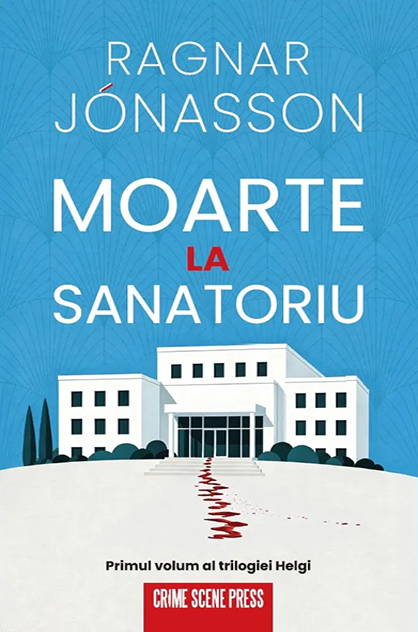
- Rating: ★★★★★
- Editura: Crime Scene Press
- Traducere: George Arion Jr.
- Pagini: 224
- Goodreads: Moarte la sanatoriu
- Poate fi cumpărată de aici: https://crimescenepress.ro/product/moarte-la-sanatoriu
„Moarte la sanatoriu” de Ragnar Jónasson a fost o surpriză foarte plăcută pentru mine și un început excelent al trilogiei Helgi. Este genul de thriller nordic care nu mizează pe acțiune alertă sau răsturnări de situație la fiecare capitol, ci pe construirea atentă a atmosferei, a personajelor și a misterului. Tocmai acest ritm mai lent mi-a plăcut foarte mult, pentru că autorul își acordă timpul necesar pentru a ne introduce în poveste, pentru a ne face să înțelegem fiecare personaj și pentru a dezvălui, treptat, toate piesele acestui puzzle.
Povestea alternează între două planuri temporale. În 1983, acțiunea ne poartă într-un fost sanatoriu din Akureyri, cândva destinat tratării bolnavilor de tuberculoză. Clădirea, aproape abandonată, păstrează un aer apăsător și multe secrete. Doar o singură aripă mai este funcțională, unde lucrează un grup restrâns de angajați. Liniștea locului este distrusă în momentul în care Yrsa, una dintre asistente, este găsită ucisă. Crima rămâne fără rezolvare, iar misterul continuă să planeze asupra sanatoriului timp de aproape treizeci de ani.
În 2012 îl cunoaștem pe Helgi Reykdal, student la criminologie, întors în Islanda după o perioadă petrecută la studii în străinătate. Fascinat de cazul uitat al sanatoriului și de cele două crime rămase nerezolvate, acesta începe să îi intervieveze pe foștii angajați ai spitalului, încercând să afle ce s-a întâmplat cu adevărat în urmă cu aproape trei decenii. Fiecare discuție scoate la iveală detalii noi, contradicții și secrete bine ascunse, iar trecutul începe să se lege din ce în ce mai mult de prezent.
Unul dintre lucrurile care mi-au plăcut cel mai mult a fost felul în care este construit Helgi. Nu este doar un personaj care încearcă să rezolve un caz vechi, ci un om cu propriile îndoieli și probleme. Îl vedem confruntându-se cu decizii importante din viața personală: dacă să își continue studiile în străinătate sau să rămână acasă, dacă să accepte un post în poliție, cum să gestioneze relația complicată cu partenera sa și dacă este pregătit să facă pasul spre o locuință proprie. Toate aceste aspecte îl fac să pară foarte autentic și ușor de înțeles, iar pe parcurs am simțit că îl cunosc din ce în ce mai bine.
De altfel, toate personajele sunt foarte bine conturate. Fiecare dintre foștii angajați ai sanatoriului are propria perspectivă asupra evenimentelor, propriile secrete și propriile motive pentru care anumite lucruri au fost ascunse atâta timp. Mi-a plăcut că autorul nu grăbește dezvăluirile și lasă cititorul să tragă singur concluzii, schimbând constant suspiciunile de la un personaj la altul.
Atmosfera este, fără îndoială, unul dintre cele mai mari atuuri ale cărții. Stilul nordic specific lui Ragnar Jónasson se simte în fiecare pagină, prin descrierile peisajelor reci și izolate ale Islandei și ale vechiului sanatoriu, care capătă aproape rolul unui personaj în sine. Decorul contribuie enorm la tensiunea poveștii și amplifică senzația că trecutul nu a dispărut niciodată cu adevărat, ci continuă să bântuie fiecare încăpere și fiecare om implicat.
Mi-a plăcut foarte mult și felul în care trecutul și prezentul se împletesc. Chiar dacă investigația avansează într-un ritm lent, fiecare informație nouă are un scop și completează imaginea de ansamblu. Nu am simțit niciun moment că povestea trenează, dimpotrivă, am apreciat faptul că autorul construiește cu răbdare misterul și oferă fiecărui detaliu importanța pe care o merită.
Nu este o carte pentru cei care caută un thriller plin de urmăriri și acțiune continuă, ci pentru cititorii care apreciază enigmele bine construite, personajele credibile și atmosfera apăsătoare specifică romanelor nordice. Pentru mine, „Moarte la sanatoriu” a fost un început excelent al trilogiei Helgi și m-a făcut să îmi doresc să continui cât mai curând seria. Ragnar Jónasson reușește să creeze un mister elegant, construit cu atenție până la ultimul detaliu, iar finalul oferă satisfacția unei investigații în care fiecare piesă își găsește, în cele din urmă, locul.


Death at the Sanatorium – Ragnar Jónasson (Helgi Trilogy, #1)
„Death at the Sanatorium” by Ragnar Jónasson was a very pleasant surprise for me and an excellent start to the Helgi trilogy. It’s the kind of Nordic thriller that doesn’t rely on relentless action or shocking twists at the end of every chapter, but instead focuses on carefully building the atmosphere, the characters, and the mystery. That slower pace is exactly what I enjoyed most, as the author takes the time to immerse the reader in the story, develop each character, and gradually reveal all the pieces of the puzzle.
The novel alternates between two timelines. In 1983, the story takes us to a former sanatorium in Akureyri, once used to treat tuberculosis patients. The nearly abandoned building has an oppressive atmosphere and holds many secrets. Only one wing is still in operation, staffed by a small group of employees. The quiet routine is shattered when Yrsa, one of the nurses, is found murdered. The crime remains unsolved, and the mystery continues to haunt the sanatorium for nearly thirty years.
In 2012, we meet Helgi Reykdal, a criminology student who has returned to Iceland after studying abroad. Fascinated by the forgotten sanatorium case and the two unsolved murders connected to it, he begins interviewing the hospital’s former employees in an attempt to uncover what really happened almost three decades earlier. Each conversation reveals new details, contradictions, and long-buried secrets, and the past becomes increasingly intertwined with the present.
One of the things I appreciated most was the way Helgi is written. He’s not just a character trying to solve a cold case—he’s also a person dealing with his own doubts and personal struggles. We see him facing important life decisions: whether to continue his studies abroad or stay in Iceland, whether to accept a position with the police, how to navigate his complicated relationship with his partner, and whether he’s ready to take the step toward owning a home. All of these aspects make him feel genuine and relatable, and as the story progressed, I felt like I got to know him better and better.
The supporting cast is equally well developed. Each of the former sanatorium employees has their own perspective on the events, their own secrets, and their own reasons for keeping certain truths hidden for so long. I especially liked that the author never rushes the revelations, allowing readers to draw their own conclusions while constantly shifting suspicion from one character to another.
The atmosphere is undoubtedly one of the novel’s greatest strengths. Ragnar Jónasson’s signature Nordic style is present on every page through his vivid descriptions of Iceland’s cold, isolated landscapes and the old sanatorium itself, which almost becomes a character in its own right. The setting adds immensely to the tension and reinforces the feeling that the past has never truly disappeared but continues to linger in every room and every person connected to the case.
I also really enjoyed the way the past and present are woven together. Although the investigation unfolds at a measured pace, every new piece of information serves a purpose and helps complete the bigger picture. At no point did I feel that the story dragged; on the contrary, I appreciated the author’s patience in building the mystery and giving every detail the importance it deserved.
This isn’t a book for readers looking for a fast-paced thriller filled with constant action and chase scenes. Instead, it’s perfect for those who enjoy carefully crafted mysteries, believable characters, and the brooding atmosphere that defines the best Nordic crime fiction. For me, „Death at the Sanatorium” was an outstanding introduction to the Helgi trilogy and left me eager to continue the series as soon as possible. Ragnar Jónasson has crafted an elegant, meticulously constructed mystery, and the ending delivers the satisfaction of an investigation in which every piece of the puzzle finally falls into place.
