
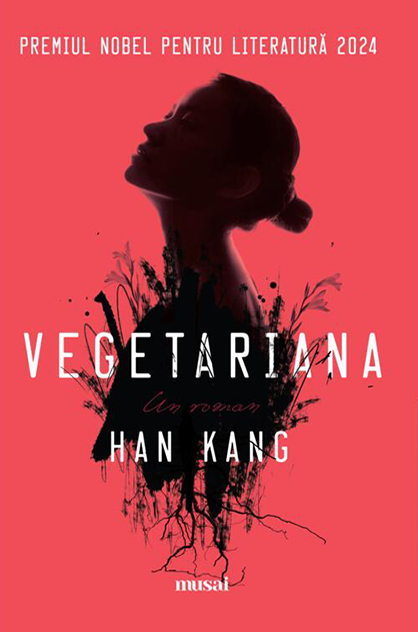
- Rating: ★★★★☆
- Editura: Art, imprint musai
- Traducere: Iolanda Prodan
- Pagini: 256
- Goodreads: Vegetariana
- Poate fi cumpărată de aici: https://www.editura-art.ro/info/carte/vegetariana
„Vegetariana”, de Han Kang, este genul de roman care te captivează prin stranietatea lui și rămâne cu tine mult timp după ce ai terminat de citit. Mi s-a părut o carte interesantă și originală, dar și dureroasă în anumite momente. Nu este o lectură ușoară: unele scene sunt tulburătoare, iar felul în care povestea se îndepărtează treptat de normal te face să te întrebi cât din alegerile lui Yeong-hye îi aparțin cu adevărat și cât sunt o reacție la lumea care o înconjoară. Pentru mine, romanul merită patru stele: admir felul în care Han Kang construiește povestea și temele ei, chiar dacă unele pasaje au fost mai greu de parcurs.
La început, Yeong-hye pare să ducă o viață obișnuită alături de soțul ei, un bărbat care o descrie mai ales prin cât de comodă și lipsită de pretenții este. După ce începe să aibă vise violente, pline de sânge și imagini crude, ea hotărăște să nu mai mănânce carne. Pentru Yeong-hye, decizia nu este doar o schimbare de dietă, ci o încercare de a se îndepărta de violența pe care o simte în jurul ei și în propriul corp. Pentru soțul și familia ei, însă, alegerea devine o problemă care trebuie corectată. În loc să o asculte, cei apropiați încearcă să o facă să revină la viața de dinainte, iar fiecare încercare de a o controla o împinge și mai departe de ei.
Romanul este alcătuit din trei părți, povestite prin perspectiva unor persoane din jurul lui Yeong-hye. În prima, o vedem prin ochii soțului ei, care pare mai preocupat de felul în care comportamentul ei îi tulbură confortul și imaginea socială decât de suferința ei. În partea a doua, cumnatul ei, un artist, devine fascinat de corpul și de tăcerea ei și o implică într-un proiect artistic care estompează tot mai mult granița dintre artă și exploatare. În ultima parte, sora ei, In-hye, încearcă să înțeleagă ce s-a întâmplat și să aibă grijă de ea, în timp ce Yeong-hye se retrage tot mai mult din viața obișnuită. Fiecare voce aduce altă perspectivă, dar personajul principal rămâne, într-un fel, greu de cunoscut: aflăm multe despre felul în care este privită, însă mult mai puține despre ce ar putea spune ea însăși.
Unul dintre lucrurile care m-au impresionat cel mai mult este felul în care romanul vorbește despre discriminare și despre locul femeii în familie. Yeong-hye este tratată adesea ca și cum corpul și deciziile ei ar aparține altora: soțul vrea o parteneră care să nu-i complice viața, tatăl încearcă să i se impună prin forță, iar cumnatul o privește prin prisma dorințelor și a imaginației sale. Fiecare dintre ei pare să creadă că știe ce ar trebui să facă ea. Mi s-a părut dureros să văd cât de puțin loc i se lasă să aleagă pentru sine și cât de repede independența ei este considerată o problemă. Cartea arată astfel cum o femeie poate ajunge să fie privită mai curând ca soție, fiică sau corp de admirat decât ca persoană cu limite și dorințe proprii.
Mi-a plăcut și stilul reținut al autoarei. Chiar și atunci când întâmplările devin extreme, vocea narativă rămâne calmă, aproape rece. Tocmai această distanță face ca scenele să fie și mai apăsătoare: cititorului îi revine să simtă șocul, tristețea sau furia pe care personajele nu le exprimă întotdeauna direct. Romanul nu explică totul și nu oferă răspunsuri simple despre motivele lui Yeong-hye. În schimb, lasă în urmă imagini și întrebări despre libertate, traumă, singurătate și felul în care oamenii încearcă să controleze ceea ce nu înțeleg.
Han Kang a primit Premiul Nobel pentru Literatură în 2024, pentru proza sa poetică și intensă, care explorează traumele istorice și fragilitatea vieții omenești. Acest premiu oferă un context pentru universul ei literar, iar „Vegetariana” arată limpede cât de mult poate spune autoarea printr-o poveste scurtă, concentrată și neliniștitoare. Romanul a fost remarcat și de publicații precum „Time” și „Entertainment Weekly”, care l-au inclus printre cele mai bune cărți ale anului.
Recomand „Vegetariana” celor care caută o lectură provocatoare și sunt pregătiți pentru teme și scene dificile. Nu este o carte pe care am citit-o pentru alinare, ci una care m-a făcut să mă gândesc la felul în care sunt ascultate femeile și la cât de ușor ajung ceilalți să decidă în locul lor. Mi s-a părut o experiență literară puternică, uneori frumoasă prin scriitură și adesea greu de parcurs prin subiect.


The Vegetarian – Han Kang
„The Vegetarian”, by Han Kang, is the kind of novel that captivates you with its strangeness and stays with you long after you’ve finished reading. I found it interesting and original, but also painful at times. It isn’t an easy read: some scenes are disturbing, and the way the story gradually moves further away from the ordinary makes you wonder how much of Yeong-hye’s choices truly belong to her and how much is a response to the world around her. For me, the novel deserves four stars. I admire the way Han Kang builds the story and its themes, even though some passages were difficult to get through.
At first, Yeong-hye seems to lead an ordinary life with her husband, a man who describes her mainly in terms of how convenient and undemanding she is. After she begins having violent dreams filled with blood and brutal images, she decides to stop eating meat. For Yeong-hye, this isn’t just a change in diet; it’s an attempt to distance herself from the violence she feels around her and within her own body. To her husband and family, however, her decision becomes a problem that needs to be fixed. Instead of listening to her, those close to her try to make her return to her old life, and every attempt to control her pushes her further away from them.
The novel is divided into three parts, each told from the perspective of someone in Yeong-hye’s life. In the first, we see her through her husband’s eyes. He seems more concerned with how her behavior disrupts his comfort and social image than with her suffering. In the second, her brother-in-law, an artist, becomes fascinated by her body and silence and involves her in an art project that increasingly blurs the line between art and exploitation. In the final part, her sister, In-hye, tries to understand what has happened and care for her as Yeong-hye withdraws further from ordinary life. Each voice offers a different perspective, but the main character remains difficult to know in a way: we learn a lot about how others see her, but far less about what she might say herself.
One of the things that struck me most is the way the novel addresses discrimination and women’s place in the family. Yeong-hye is often treated as though her body and decisions belong to other people: her husband wants a partner who won’t complicate his life, her father tries to impose his will by force, and her brother-in-law sees her through the lens of his own desires and imagination. Each of them seems to believe they know what she ought to do. I found it painful to see how little room she is given to choose for herself, and how quickly her independence is treated as a problem. The book shows how a woman can come to be seen more as a wife, daughter, or body to admire than as a person with her own boundaries and desires.
I also liked the author’s restrained style. Even when events become extreme, the narrative voice remains calm, almost cold. That very distance makes the scenes all the more oppressive: it is left to the reader to feel the shock, sadness, or anger that the characters do not always express directly. The novel doesn’t explain everything or offer simple answers about Yeong-hye’s motives. Instead, it leaves behind images and questions about freedom, trauma, loneliness, and the ways people try to control what they don’t understand.
Han Kang received the 2024 Nobel Prize in Literature for her poetic and intense prose, which explores historical traumas and the fragility of human life. The award offers some context for her literary world, and „The Vegetarian” clearly shows how much the author can convey through a short, focused, unsettling story. The novel was also recognized by publications such as „Time” and „Entertainment Weekly”, which included it among the best books of the year.
I recommend „The Vegetarian” to readers looking for a challenging book who are prepared for difficult themes and scenes. It isn’t a book I read for comfort; it made me think about how women are listened to and how easily others end up making decisions for them. I found it a powerful literary experience, sometimes beautiful in its writing and often difficult in its subject matter.
