
- Rating: ★★★☆☆
- Editura: Trei, imprint Fiction Connection / Crime
- Traducere: Isabella Prodan
- Pagini: 224
- Goodreads: Nu te teme de întuneric
- Poate fi cumpărată de aici: https://www.edituratrei.ro/carte/nu-te-teme-de-intuneric/15130/
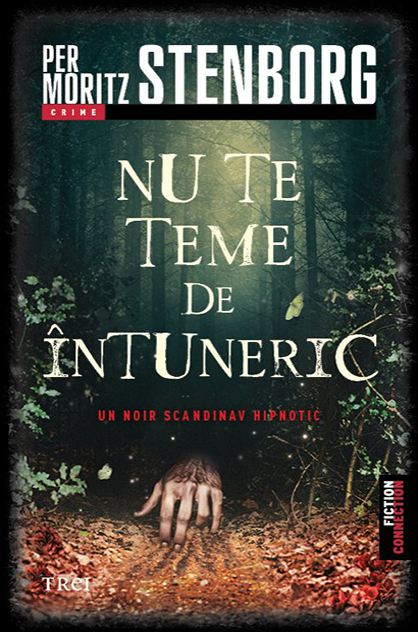
Am început „Nu te teme de întuneric” de Per Moritz Stenborg cu așteptări destul de mari. Coperta mi-a transmis încă de la început senzația că urmează să citesc un thriller întunecat, genul acela de poveste care îți dă fiori și îți rămâne în minte după ce închizi cartea. În plus, faptul că este un noir scandinav m-a făcut și mai curioasă, pentru că am o slăbiciune pentru atmosfera rece, apăsătoare și misterioasă pe care o întâlnim atât de des în literatura nordică. Așa că, atunci când am început cartea, mă așteptam la o poveste care să mă țină în tensiune și să mă facă să privesc puțin mai suspicios colțurile întunecate ale camerei.
Acțiunea ne poartă în primăvara anului 1983, în Silvernäs, un orășel suedez care pare, la prima vedere, liniștit și lipsit de evenimente importante. Topirea gheții și pericolul inundațiilor creează deja un decor destul de apăsător, însă liniștea localității este distrusă atunci când este descoperită o mână de om înfiptă într-un par. Degetele sunt așezate într-un fel care seamănă cu un salut, iar imaginea este, fără îndoială, una macabră. De aici începe investigația polițistului Erland Hjort, care încearcă să afle cine este victima și, mai ales, cine se află în spatele acestor crime.
Pe măsură ce ancheta avansează, lucrurile devin din ce în ce mai complicate. Apar alte bucăți de cadavru, iar crimele nu par să fie simple acte de violență fără legătură între ele. Sunt descoperite și simboluri satanice, iar în spatele evenimentelor actuale par să existe secrete vechi, pe care oamenii din Silvernäs le-au ascuns mult timp. Mi s-a părut interesantă această idee a unui oraș mic în care aproape fiecare personaj pare să aibă ceva de ascuns. Cu cât Erland încearcă să pună cap la cap informațiile, cu atât are impresia că se afundă într-o poveste mult mai complicată decât cea pe care o avea inițial în față.
Erland Hjort este personajul central și, prin intermediul lui, vedem cea mai mare parte a poveștii. El este prins între ancheta pe care începe să o trateze aproape ca pe o obsesie și problemele din propria viață. Soția lui devine tot mai suspicioasă, iar situația se complică și mai mult din cauza apropierii sale de Anna Karjala. Relația dintre Erland și Anna adaugă o dimensiune personală poveștii și îl face pe protagonist să fie prins într-un conflict care nu ține doar de cazul pe care îl investighează. Mi-a plăcut ideea că ancheta și viața lui personală se amestecă treptat, pentru că asta îi oferă personajului mai multă profunzime, însă, în același timp, am simțit că uneori aceste fire ajung să se încurce prea mult.
Anna Karjala este, la rândul ei, un personaj important pentru evoluția lui Erland și pentru partea mai personală a romanului. Relația dintre cei doi este una complicată și riscantă, mai ales pentru că Erland este căsătorit, iar suspiciunile din partea soției sale nu fac decât să crească tensiunea. În jurul lor apar numeroase alte personaje din comunitate, fiecare cu propriile probleme, relații și secrete. Aici am avut una dintre primele mele dificultăți cu romanul: sunt destul de multe personaje și nu mi-a fost întotdeauna ușor să țin pasul cu ele. La început am avut nevoie de ceva timp pentru a-mi da seama cine este cine și ce legătură are fiecare cu povestea. Din fericire, pe măsură ce am înaintat, lucrurile au început să se clarifice și am reușit să așez personajele în poveste.
Ideea de bază a romanului mi s-a părut foarte atractivă. O mână găsită într-un loc public, apoi alte rămășițe umane răspândite prin localitate, simboluri satanice și un orășel în care trecutul pare să ascundă lucruri deloc plăcute, toate aceste elemente sună ca ingredientele perfecte pentru un thriller care să te neliniștească. Și tocmai de aceea cred că problema mea principală a fost execuția. Aveam toate motivele să mă simt neliniștită citind anumite scene, însă, în realitate, nu am avut aproape niciodată senzația aceea de teamă sau de tensiune pe care o caut într-un thriller nordic.
Faptul că sunt descoperite bucăți dintr-un cadavru în mai multe locuri din Silvernäs ar fi trebuit să fie unul dintre acele elemente care mă fac să mă uit peste umăr și să mă întreb ce urmează. Din păcate, nu am simțit acest lucru. Scenele sunt macabre prin ceea ce se întâmplă, dar pentru mine nu au avut suficientă forță încât să devină cu adevărat înfricoșătoare. Am tot așteptat să apară acea atmosferă apăsătoare, acel sentiment că ceva rău se apropie și că nu poți să lași cartea din mână până nu afli ce se întâmplă. Din punctul meu de vedere, acesta este cel mai mare minus al romanului: nu a reușit să-mi transmită fiorii pe care îi așteptam de la un thriller de tip nordic noir și nici nu m-a ținut în suspans atât cât mi-aș fi dorit.
Un alt aspect care m-a dezamăgit a fost investigația poliției. Mă așteptam ca ancheta să fie mai prezentă în poveste și să văd mai multă implicare din partea polițiștilor. Mi-ar fi plăcut să existe mai multe interogatorii, mai multe piste urmărite, mai multe probe strânse și analizate și, în general, să simt că asist la o investigație polițienească mai complexă. În schimb, am avut uneori senzația că ancheta trece prea repede peste anumite lucruri care ar fi putut fi interesante și că unele întrebări rămân în plan secund. Pentru mine, asta a redus din sentimentul de mister și din satisfacția de a urmări o anchetă pas cu pas.
Și totuși, nu pot spune că nu am găsit nimic interesant în carte. Atmosfera unui mic oraș suedez în anii ’80, crimele bizare, secretele din trecut și relațiile complicate dintre personaje formează o bază foarte bună pentru un thriller. Mi-a plăcut și faptul că autorul nu se limitează la crimă în sine, ci încearcă să construiască în jurul ei o poveste despre oameni, relații și lucruri care au fost ascunse prea mult timp. Unele idei mi s-au părut chiar foarte promițătoare, iar pe alocuri am fost curioasă să văd unde vor duce toate aceste fire.
Cred însă că tocmai numărul mare de fire narative a devenit, în final, una dintre problemele romanului. Sunt multe personaje, multe secrete și mai multe direcții în care poate merge povestea, iar pe parcurs am simțit că uneori lucrurile se complică mai mult decât este necesar. În loc să mă apropii treptat de rezolvarea misterului și să simt că piesele unui puzzle se așază una câte una, am avut câteva momente în care am simțit că trebuie să depun prea mult efort pentru a urmări toate conexiunile. Pentru un roman de debut, însă, consider că Per Moritz Stenborg are destul de mult potențial. Se vede că există idei, ambiție și dorința de a construi o poveste întunecată și diferită, chiar dacă rezultatul final nu a funcționat complet pentru mine.
Per total, „Nu te teme de întuneric” a fost o lectură cu o premisă foarte bună, dar care nu a reușit să se ridice la nivelul așteptărilor mele. Am apreciat ideea de la care a pornit și câteva dintre elementele poveștii, însă mi-au lipsit tensiunea, suspansul și acea atmosferă neliniștitoare pe care o asociam cu un noir scandinav. Mi-aș fi dorit o investigație mai bine conturată, mai multe momente care să mă țină cu sufletul la gură și, poate, ceva mai multă claritate în ceea ce privește personajele și firele poveștii. Pentru mine, este un roman care arată că autorul are potențial, dar care, în același timp, mai are loc de îmbunătățiri.


Dacă sunteți curioși să aflați și alte păreri, puteți vizita următoarele bloguri, unde au apărut sau vor apărea recenzii în zilele următoare: Analogii, Antologii; Anca și cărtile; Biblioteca lui Liviu; Cărțile mele și alți demoni; Ciobanul de azi; Citește-mi-l; Falled; Fata cu cartea; Literatura pe tocuri; Fantaliria.
Un proiect Crime Club:

Don’t Be Afraid of the Dark – Per Moritz Stenborg
I started „Don’t Be Afraid of the Dark” by Per Moritz Stenborg with fairly high expectations. The cover gave me the feeling from the very beginning that I was about to read a dark thriller, the kind of story that gives you chills and stays with you after you close the book. On top of that, the fact that it is a Scandinavian noir made me even more curious, because I have a soft spot for the cold, oppressive, and mysterious atmosphere that we encounter so often in Nordic literature. So, when I started the book, I was expecting a story that would keep me on edge and make me look a little more suspiciously at the dark corners of the room.
The story takes us to the spring of 1983, in Silvernäs, a small Swedish town that, at first glance, seems quiet and free of any major events. The melting ice and the danger of flooding already create a rather oppressive setting, but the town’s tranquility is shattered when a human hand is discovered stuck onto a stake. The fingers are arranged in a way that resembles a wave, and the image is undoubtedly macabre. This is where police officer Erland Hjort’s investigation begins, as he tries to find out who the victim is and, more importantly, who is behind these crimes.
As the investigation progresses, things become increasingly complicated. More pieces of a body are discovered, and the murders do not seem to be simple, unrelated acts of violence. Satanic symbols are also found, and behind the events of the present there seem to be old secrets that the people of Silvernäs have kept hidden for a long time. I found this idea of a small town where almost every character seems to have something to hide quite interesting. The more Erland tries to piece the information together, the more he feels that he is getting drawn into a story far more complicated than the one he initially thought he was dealing with.
Erland Hjort is the central character, and through him we see most of the story. He is caught between the investigation, which he gradually begins to treat almost like an obsession, and the problems in his own life. His wife becomes increasingly suspicious, and the situation becomes even more complicated because of his growing closeness to Anna Karjala. The relationship between Erland and Anna adds a personal dimension to the story and places the protagonist in a conflict that is not limited to the case he is investigating. I liked the idea of the investigation and his personal life gradually becoming intertwined, because it gives the character more depth. At the same time, however, I felt that these threads sometimes became too tangled.
Anna Karjala is also an important character in Erland’s development and in the more personal side of the novel. The relationship between the two is complicated and risky, especially because Erland is married, and his wife’s suspicions only increase the tension. Around them, there are numerous other characters from the community, each with their own problems, relationships, and secrets. This was one of my first difficulties with the novel: there are quite a lot of characters, and it was not always easy for me to keep track of them. At the beginning, I needed some time to figure out who was who and how each person was connected to the story. Fortunately, as I continued reading, things started to become clearer, and I was able to place the characters within the story.
The basic premise of the novel seemed very appealing to me. A hand found in a public place, followed by other human remains scattered throughout the town, satanic symbols, and a small town whose past seems to hide some deeply unpleasant things—all of these elements sound like the perfect ingredients for a thriller that would make you uneasy. And that is precisely why I think my main problem was the execution. I had every reason to feel disturbed while reading certain scenes, but in reality, I almost never experienced that sense of fear or tension that I look for in a thriller with a Nordic noir atmosphere.
The fact that pieces of a body are discovered in several places around Silvernäs should have been one of those elements that made me look over my shoulder and wonder what would happen next. Unfortunately, I did not feel that way. The scenes are macabre because of what happens, but for me, they did not have enough impact to become genuinely frightening. I kept waiting for that oppressive atmosphere to appear, that feeling that something bad is approaching and that you cannot put the book down until you find out what is happening. From my point of view, this is the novel’s biggest drawback: it failed to give me the chills I was expecting from a Nordic noir thriller, nor did it keep me in suspense as much as I would have liked.
Another aspect that disappointed me was the police investigation. I expected the investigation to be more prominent in the story and to see more involvement from the police officers. I would have liked there to be more interrogations, more leads being followed, more evidence collected and analyzed, and, in general, to feel that I was witnessing a more complex police investigation. Instead, I sometimes had the feeling that the investigation moved too quickly past certain things that could have been interesting and that some questions remained in the background. For me, this diminished both the sense of mystery and the satisfaction of following an investigation step by step.
And yet, I cannot say that I found nothing interesting in the book. The atmosphere of a small Swedish town in the 1980s, the bizarre murders, the secrets from the past, and the complicated relationships between the characters provide a very good foundation for a thriller. I also liked the fact that the author does not limit himself to the murder itself, but tries to build a story around it about people, relationships, and things that have been hidden for too long. Some of the ideas seemed genuinely promising to me, and at times I was curious to see where all these threads would lead.
I do think, however, that the large number of narrative threads ultimately became one of the novel’s problems. There are many characters, many secrets, and several directions in which the story can go, and as I progressed, I felt that things sometimes became more complicated than necessary. Instead of gradually getting closer to solving the mystery and feeling that the pieces of a puzzle were falling into place one by one, there were several moments when I felt that I had to put in too much effort to keep track of all the connections. For a debut novel, however, I think Per Moritz Stenborg has quite a lot of potential. It is clear that there are ideas, ambition, and a desire to build a dark and different story, even if the final result did not completely work for me.
Overall, „Don’t Be Afraid of the Dark” was a read with a very good premise, but it failed to live up to my expectations. I appreciated the idea behind it and some of the elements of the story, but I was missing the tension, suspense, and unsettling atmosphere that I associate with Scandinavian noir. I would have liked a more clearly developed investigation, more moments that kept me on the edge of my seat, and perhaps a little more clarity when it came to the characters and the different storylines. For me, it is a novel that shows that the author has potential, but at the same time, still has room for improvement.
