
- Rating: ★★★★☆
- Editura: Niculescu, imprint Fiction / Noir
- Traducere: Iulia Dromereschi
- Pagini: 288
- Goodreads: Cei treziți
- Poate fi cumpărată de aici: https://www.niculescu.ro/catalog/product/view/id/3425/s/cei-treziti/
„Cei treziți” de Éric Giacometti este genul de thriller care m-a făcut să citesc din ce în ce mai repede, pentru că eram curioasă să aflu unde va duce toată povestea. Este o carte în care misterul, religia, misticismul, tradițiile străvechi și știința se întâlnesc într-un mod destul de neobișnuit. Nu este genul de thriller pe care îl citesc de obicei, mai ales din cauza componentei religioase foarte puternice, însă sinopsisul și ideea din spatele poveștii m-au intrigat prea mult ca să nu îi dau o șansă.
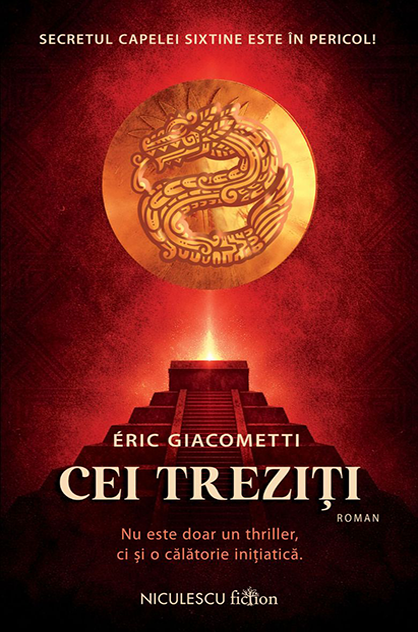
Povestea ne poartă prin mai multe locuri și începe într-un mod care ridică imediat multe semne de întrebare. În Mexic, la situl arheologic Teotihuacan, un cardinal se aruncă de pe vârful piramidei dedicate zeului șarpe. Gestul este cu atât mai misterios cu cât, înainte de a-și lua viața, acesta consumase Ayahuasca, substanța considerată sacră în anumite tradiții din America de Sud. Încă de aici avem impresia că nu este vorba despre un simplu caz de sinucidere, ci despre ceva mult mai complicat, legat de credințe vechi, ritualuri și informații pe care cineva încearcă să le ascundă.
În Paris o întâlnim pe Agathe, o femeie care duce până atunci o viață obișnuită. Totul se schimbă însă în momentul în care primește un apel ciudat. După acel telefon, începe să nu mai poată dormi, dar, în același timp, simte că ceva s-a schimbat în interiorul ei. Agathe devine una dintre piesele importante ale poveștii, iar transformarea ei este unul dintre lucrurile care m-au făcut curioasă să văd ce se va întâmpla mai departe. Situația ei este strâns legată de misterul care se dezvoltă pe parcurs și de acea idee a „trezirii” sugerată încă din titlul cărții.
În Roma, povestea capătă o altă direcție. Un etnolog este chemat de o fundație apropiată Vaticanului pentru a încerca să descifreze misterul unor fresce realizate de Michelangelo. La prima vedere, pare că avem de-a face cu o problemă istorică și artistică, însă lucrurile se complică rapid. Frescele ascund indicii care duc spre simboluri uitate, mesaje codificate și tradiții mult mai vechi decât pare la început. Pentru Biserică, descoperirile făcute încep să fie legate de o adevărată numărătoare inversă, iar miza devine tot mai mare.
Mi-a plăcut faptul că acțiunea se construiește din mai multe fire care, la început, par separate. Avem personaje aflate în locuri diferite, situații misterioase și informații care nu par să aibă neapărat o legătură între ele. Treptat însă, piesele încep să se așeze și ajungem să înțelegem conexiunile dintre personaje și evenimente. La început am fost puțin copleșită de numărul destul de mare de personaje și mi-a fost mai greu să rețin cine este fiecare și ce rol are în poveste. Din fericire, pe măsură ce am avansat cu lectura, lucrurile au devenit mai clare, iar personajele au început să capete fiecare un loc bine definit în intrigă.
Unul dintre aspectele care mi-au plăcut cel mai mult a fost atmosfera de mister. Cartea are foarte multe întrebări la care vrei să găsești răspunsul: ce se ascunde în spatele mesajelor codificate, ce legătură există între Ayahuasca și evenimentele care au loc, ce înseamnă simbolurile descoperite și, mai ales, ce se află în spatele acestei misterioase „treziri”. Autorul combină toate aceste elemente cu informații despre religie, tradiții străvechi și știință, iar rezultatul este o poveste care reușește să îți păstreze atenția.
Mi s-a părut și o carte care se citește destul de repede. Chiar dacă are multe informații și personaje, ritmul poveștii m-a făcut să vreau să continui. De fiecare dată când aveam impresia că am înțeles încotro se îndreaptă acțiunea, apărea un nou indiciu sau o informație care schimba puțin perspectiva. Suspansul este prezent pe aproape tot parcursul lecturii și cred că acesta a fost unul dintre principalele motive pentru care am rămas atât de prinsă de poveste.
Trebuie să recunosc însă că partea religioasă a fost și motivul pentru care nu i-am acordat punctaj maxim. În general, nu aleg foarte des cărți în care religia ocupă un loc atât de important în acțiune și nu este neapărat o temă pe care să o caut atunci când îmi aleg următoarea lectură. În cazul de față, însă, am făcut o excepție pentru că sinopsisul mi s-a părut prea interesant, iar combinația dintre mister, simboluri, Ayahuasca, Vatican, Michelangelo, tradiții străvechi și știință mi-a stârnit curiozitatea.
Per total, „Cei treziți” a fost o lectură care mi-a plăcut destul de mult și care m-a surprins prin felul în care îmbină thrillerul cu elemente esoterice și istorice. Nu a fost chiar genul meu obișnuit de carte, dar tocmai de aceea mă bucur că am ales să o citesc. Are mister, suspans, personaje numeroase și o intrigă construită în jurul unor întrebări care te fac să vrei să afli adevărul până la final. Chiar dacă tema religioasă a fost un mic minus pentru mine, povestea a reușit să mă țină interesată și să îmi ofere o lectură alertă și diferită de ceea ce citesc de obicei. Pentru mine, „Cei treziți” este, așadar, o carte de 4 stele, potrivită mai ales pentru cei care iubesc thrillerele cu mister, conspirații, simboluri și o puternică doză de misticism.


The Awakened – Éric Giacometti
„The Awakened” by Éric Giacometti is the kind of thriller that made me read faster and faster because I was so curious to find out where the whole story was going to lead. It is a book where mystery, religion, mysticism, ancient traditions, and science come together in a rather unusual way. This is not the kind of thriller I usually read, especially because of its strong religious component, but the synopsis and the idea behind the story intrigued me too much not to give it a chance.
The story takes us through several different locations and begins in a way that immediately raises many questions. In Mexico, at the Teotihuacan archaeological site, a cardinal throws himself from the top of the pyramid dedicated to the Serpent God. His actions are even more mysterious because, before taking his own life, he had consumed Ayahuasca, a substance considered sacred in certain South American traditions. From this point on, we get the feeling that this is not simply a case of suicide, but something much more complicated, connected to ancient beliefs, rituals, and information that someone is trying to keep hidden.
In Paris, we meet Agathe, a woman who has been living an ordinary life up until that point. Everything changes, however, when she receives a strange phone call. After that call, she finds herself unable to sleep, while at the same time feeling that something inside her has changed. Agathe becomes one of the important pieces of the story, and her transformation was one of the things that made me curious to see what would happen next. Her situation is closely connected to the mystery that gradually unfolds and to the idea of “awakening” suggested by the title of the book.
In Rome, the story takes another turn. An ethnologist is called in by a foundation with ties to the Vatican to try to decipher the mystery behind some frescoes created by Michelangelo. At first, it seems that we are dealing with a historical and artistic mystery, but things quickly become more complicated. The frescoes hide clues leading to forgotten symbols, coded messages, and traditions that are much older than they initially appear. For the Church, the discoveries begin to be connected to a real countdown, and the stakes continue to rise.
One of the things I liked about the book was the way the story is built around several different plotlines that initially seem unrelated. We have characters in different locations, mysterious situations, and pieces of information that do not necessarily appear to have anything to do with one another. Gradually, however, the pieces begin to fall into place, and we start to understand the connections between the characters and the events. At first, I was a little overwhelmed by the fairly large number of characters, and I found it difficult to remember who everyone was and what role they played in the story. Fortunately, as I progressed through the book, things became clearer, and each character began to have a well-defined place in the plot.
One of the aspects I enjoyed the most was the atmosphere of mystery. The book raises so many questions that you want to find the answers: what lies behind the coded messages, what connection Ayahuasca has to the events taking place, what the discovered symbols mean, and, most importantly, what lies behind this mysterious “awakening.” The author combines all these elements with information about religion, ancient traditions, and science, resulting in a story that manages to keep you engaged.
I also found it to be a fairly fast-paced read. Even though there is a lot of information and a large cast of characters, the pace of the story made me want to keep going. Every time I thought I had figured out where the plot was heading, a new clue or piece of information would appear and slightly change my perspective. The suspense is present throughout most of the book, and I think this was one of the main reasons why I remained so invested in the story.
I have to admit, though, that the religious aspect was also the reason why I didn’t give the book a perfect rating. In general, I don’t often choose books in which religion plays such an important role in the plot, and it is not necessarily a theme I look for when choosing my next read. In this case, however, I made an exception because I found the synopsis too interesting to pass up, and the combination of mystery, symbols, Ayahuasca, the Vatican, Michelangelo, ancient traditions, and science really sparked my curiosity.
Overall, „The Awakened” was a book I enjoyed quite a lot, and it surprised me with the way it combines thriller elements with esoteric and historical themes. It wasn’t exactly the type of book I usually read, but that is precisely why I’m glad I decided to give it a chance. It has mystery, suspense, a large cast of characters, and a plot built around questions that make you want to discover the truth all the way to the end. Even though the religious theme was a small drawback for me, the story managed to keep me interested and offered me a fast-paced and different reading experience from what I usually choose. For me, „The Awakened” is therefore a 4-star read, particularly suited to readers who enjoy thrillers involving mystery, conspiracies, symbols, and a strong dose of mysticism.
