
- Rating: ★★★★☆
- Editura: Niculescu, imprint Fiction / Rouge
- Traducere: Adina Pintea
- Pagini: 312
- Goodreads: Mica dansatoare
- Poate fi cumpărată de aici: https://www.niculescu.ro/mica-dansatoare.html
„Mica dansatoare” de Melanie Leschallas este una dintre acele cărți care m-au surprins plăcut, chiar dacă povestea are o doză puternică de tristețe. Este o lectură care mi-a rămas în minte mai ales prin atmosfera ei și prin felul în care reușește să îmbine arta cu realitatea dură a vremurilor.
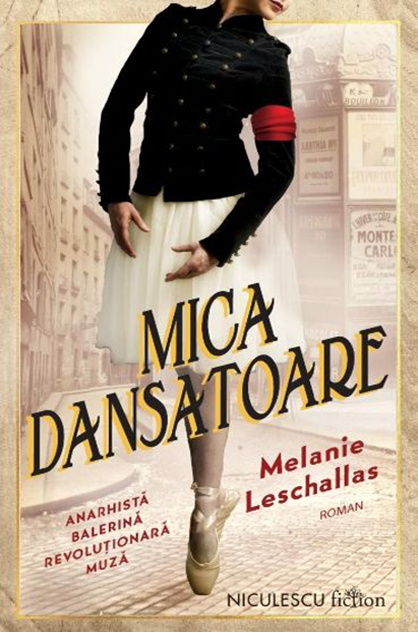
Acțiunea ne poartă în Parisul anului 1878, unde o cunoaștem pe Marie van Goethem, o fată de doar paisprezece ani, balerină la Operă. Ea este aleasă de celebrul artist Edgar Degas drept model pentru sculptura sa, Mica Dansatoare. Dar Marie nu este doar o fată fragilă care dansează pentru public. Viața ei este mult mai complicată: ziua repetă până la epuizare, într-un corp slăbit de foame, iar noaptea este prinsă într-un joc periculos, încercând să ducă mai departe idealurile tatălui ei, pierdut în timpul revoltelor.
Mi-a plăcut mult felul în care autoarea a construit personajele. Marie nu este perfectă, dar este curajoasă, ambițioasă și profund marcată de tot ce trăiește. Am simțit fiecare alegere pe care o face, fiecare teamă și fiecare speranță. La fel de interesant mi s-a părut și Degas, un artist obsedat de munca lui, dar și de ideea de a surprinde realitatea în cea mai sinceră formă. Relația dintre ei este una complexă, uneori tensionată, alteori aproape tăcută, dar mereu încărcată de sens.
Un alt lucru care mi-a atras atenția a fost modul în care sunt descrise vremurile. Cartea surprinde foarte bine diferențele dintre oameni: pe de o parte, cei bogați, cei din armată sau din conducere, care aveau parte de confort și privilegii, iar pe de altă parte, oamenii simpli, care trăiau în frig, cu lipsuri și cu teama zilei de mâine. Se simte războiul în fiecare detaliu, în foamea personajelor, în oboseala lor, în disperarea care îi împinge să facă alegeri riscante.
Povestea devine și mai intensă atunci când apare un secret de familie care schimbă totul. Din acel moment, tensiunea crește, iar Marie trebuie să aleagă între artă, familie și propriile convingeri. În plus, faptul că este urmărită de poliție adaugă un ritm alert și o stare constantă de neliniște.
Mi s-a părut o carte destul de tristă și emoționantă, dar tocmai acest lucru o face memorabilă. Autoarea reușește să redea foarte bine trăirile personajelor, de la frică și furie, până la speranță și dorința de a supraviețui. Am simțit că nu este doar o poveste despre o balerină, ci despre oameni care încearcă să-și găsească locul într-o lume nedreaptă.
După această lectură, am avut senzația că privesc altfel celebra sculptură a lui Degas. Parcă nu mai este doar o operă de artă, ci o poveste vie, plină de sacrificii, durere și visuri neîmplinite. Este genul de carte care îți schimbă perspectiva și te face să vezi dincolo de aparențe.
În concluzie, mi-a plăcut această carte pentru povestea ei interesantă, pentru personajele bine conturate și pentru atmosfera puternică. Nu este o lectură ușoară, dar este una care merită descoperită, mai ales dacă îți plac poveștile istorice încărcate de emoție.


Little Dancer – Melanie Leschallas
“Little Dancer” by Melanie Leschallas is one of those books that pleasantly surprised me, even though the story carries a strong sense of sadness. It’s a read that stayed with me because of its atmosphere and the way it blends art with the harsh reality of the times.
The action takes us to Paris in 1878, where we meet Marie van Goethem, a fourteen-year-old girl and a ballerina at the Opera. She is chosen by the famous artist Edgar Degas as the model for his sculpture, The Little Dancer. But Marie is not just a fragile girl dancing for an audience. Her life is far more complicated: during the day she rehearses to exhaustion, in a body weakened by hunger, and at night she is caught in a dangerous game, trying to carry on her father’s ideals, lost during the uprisings.
I really liked the way the author built the characters. Marie is not perfect, but she is brave, ambitious, and deeply marked by everything she goes through. I felt every choice she made, every fear and every hope. Degas was just as interesting to me—a man obsessed with his work, but also with capturing reality in its most honest form. Their relationship is complex, sometimes tense, sometimes almost silent, but always meaningful.
Another thing that caught my attention was how the period is described. The book highlights the differences between people very well: on one side, the wealthy, the military, and those in power, who lived with comfort and privilege; on the other, ordinary people, living in cold conditions, with shortages and constant fear for the next day. You can feel the impact of war in every detail—in the characters’ hunger, their exhaustion, and the desperation that pushes them toward risky choices.
The story becomes even more intense when a family secret emerges and changes everything. From that moment on, the tension rises, and Marie must choose between art, family, and her own beliefs. On top of that, being pursued by the police adds a fast pace and a constant sense of unease.
I found it to be quite a sad and emotional book, but that’s exactly what makes it memorable. The author manages to convey the characters’ feelings very well—from fear and anger to hope and the will to survive. It felt like more than just a story about a ballerina; it’s about people trying to find their place in an unfair world.
After finishing this book, I felt like I looked differently at Degas’s famous sculpture. It no longer seems like just a work of art, but a living story filled with sacrifice, pain, and unfulfilled dreams. It’s the kind of book that changes your perspective and makes you see beyond appearances.
In conclusion, I really enjoyed this book for its engaging story, well-developed characters, and powerful atmosphere. It’s not an easy read, but it’s definitely one worth discovering—especially if you enjoy emotional historical stories.
