
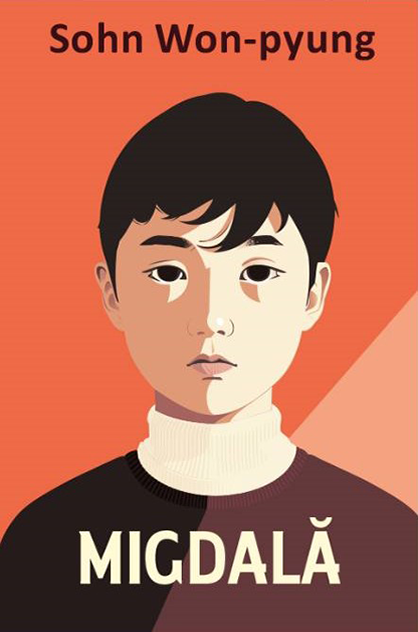
- Rating: ★★★★☆
- Editura: Alice Books, imprint Daring Alice
- Traducere: Iolanda Prodan
- Pagini: 288
- Goodreads: Migdală
- Poate fi cumpărată de aici: https://alicebooks.ro/produs/migdala-2/
„Migdală” este una dintre acele cărți care par simple la prima vedere, dar care reușesc să transmită emoții foarte puternice. Povestea îl urmărește pe Yun-jae, un băiat care s-a născut cu o afecțiune rară: el nu poate simți emoții precum frica sau furia. Din cauza acestei particularități, viața lui este diferită încă din copilărie, iar felul în care interacționează cu lumea din jur devine uneori ciudat sau greu de înțeles pentru ceilalți.
Yun-jae crește alături de mama și bunica lui, două personaje calde, care încearcă din răsputeri să îl ajute să se adapteze. Mama lui este cea care îi explică, pas cu pas, cum funcționează emoțiile, folosindu-se de liste și definiții, aproape ca un manual de instrucțiuni pentru viață. Mi-a plăcut foarte mult această relație dintre ei. Este plină de grijă, dar și de o tristețe subtilă, pentru că îți dai seama cât de mult își dorește mama lui să îl vadă „normal”.
Acțiunea capătă o turnură dureroasă după un eveniment tragic care îl lasă pe Yun-jae singur. Din acel moment, el trebuie să învețe să se descurce pe cont propriu, iar întâlnirea cu Gon, un băiat violent și impulsiv, îi schimbă complet viața. Relația dintre Yun-jae și Gon este una dintre cele mai interesante părți ale cărții: doi adolescenți complet diferiți, care, în mod neașteptat, ajung să se influențeze reciproc. Gon, deși pare dur și agresiv, ascunde și el multă suferință, iar interacțiunile dintre cei doi sunt intense și uneori greu de privit.
Pe parcursul poveștii, am urmărit cu mult interes evoluția lui Yun-jae. Chiar dacă nu simte emoțiile în mod obișnuit, el începe să înțeleagă din ce în ce mai bine oamenii și reacțiile lor. Mi s-a părut foarte emoționant felul în care, încet-încet, el își construiește propriul mod de a se conecta cu cei din jur. Nu este o transformare spectaculoasă, ci una subtilă, dar tocmai asta o face atât de autentică.
Mi-a plăcut această carte pentru sensibilitatea ei și pentru mesajul profund despre empatie și acceptare. A fost o lectură care m-a făcut să mă opresc din când în când și să mă gândesc mai mult la felul în care percepem emoțiile și la cât de diferiți putem fi unii de alții. În special, mi-a plăcut să urmăresc evoluția lui Yun-jae și felul în care relațiile lui cu ceilalți îl schimbă, chiar dacă nu în mod obișnuit.
Per total, „Migdală” este o carte emoționantă și ușor de citit, dar cu un impact puternic. Nu este genul de poveste plină de acțiune, ci mai degrabă una care se simte și se trăiește. Pentru mine, a fost o experiență frumoasă, dar și puțin tristă, motiv pentru care îi ofer patru stele și o recomand celor care caută o poveste diferită, dar profundă.


Almond – Sohn Won-pyung
“Almond” is one of those books that seems simple at first glance, but manages to convey very powerful emotions. The story follows Yun-jae, a boy who was born with a rare condition: he cannot feel emotions such as fear or anger. Because of this, his life is different from childhood, and the way he interacts with the world around him can sometimes seem strange or hard for others to understand.
Yun-jae grows up alongside his mother and grandmother, two warm characters who do everything they can to help him adapt. His mother is the one who explains, step by step, how emotions work, using lists and definitions—almost like an instruction manual for life. I really loved their relationship. It is full of care, but also a subtle sadness, because you can feel how much his mother wishes to see him as “normal.”
The story takes a painful turn after a tragic event that leaves Yun-jae alone. From that moment on, he has to learn to manage on his own, and his encounter with Gon, a violent and impulsive boy, completely changes his life. The relationship between Yun-jae and Gon is one of the most interesting parts of the book: two completely different teenagers who, unexpectedly, begin to influence each other. Gon, although he seems tough and aggressive, also hides a lot of pain, and the interactions between them are intense and sometimes difficult to watch.
Throughout the story, I followed Yun-jae’s development with great interest. Even though he does not experience emotions in the usual way, he gradually begins to understand people and their reactions better and better. I found it very moving how, little by little, he builds his own way of connecting with those around him. It is not a dramatic transformation, but a subtle one—and that is exactly what makes it feel so authentic.
I liked this book for its sensitivity and its deep message about empathy and acceptance. It was a read that made me pause from time to time and think more about how we perceive emotions and how different we can be from one another. I especially enjoyed following Yun-jae’s growth and the way his relationships with others change him, even if not in a conventional way.
Overall, “Almond” is an emotional and easy-to-read book, but with a strong impact. It is not the kind of story filled with action, but rather one that you feel and experience. For me, it was a beautiful but slightly sad experience, which is why I give it four stars and recommend it to those looking for a different yet profound story.
