
- Rating: ★★★☆☆
- Editura: Litera, imprint Folio
- Traducere: Irina-Marina Borțoi
- Pagini: 528
- Goodreads: Soția-vulpe
- Poate fi cumpărată de aici: https://www.litera.ro/sotia-vulpe-affo72
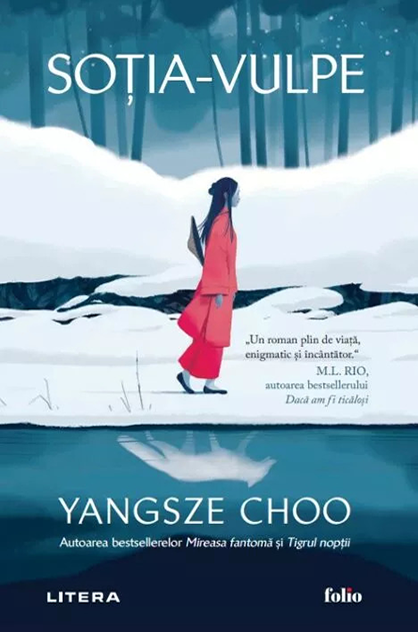
„Soția-vulpe” de Yangsze Choo este genul de roman care m-a atras în primul rând prin atmosferă și prin ideea de la care pornește. Acțiunea ne duce în Manciuria anului 1908, în ultimii ani ai dinastiei Qing, într-o lume în care realitatea și supranaturalul se amestecă foarte ușor. Folclorul chinezesc, poveștile despre vulpi care se pot transforma în oameni și misterele din jurul lor creează de la început o atmosferă rece, misterioasă și puțin neliniștitoare. Mi-a plăcut această combinație dintre istorie, legendă și investigație, chiar dacă, pe parcurs, nu am simțit că povestea m-a prins atât de mult pe cât mi-aș fi dorit.
Unul dintre firele principale ale romanului îl urmărește pe Bao, un detectiv neobișnuit, care are capacitatea de a-și da seama când cineva minte. El este chemat să investigheze moartea unei curtezane găsite înghețate pe pragul unei uși. Cazul devine cu atât mai interesant cu cât în jurul morții femeii apar tot felul de zvonuri despre vulpi supranaturale, despre care se spune că pot lua înfățișarea unor oameni frumoși pentru a-i seduce sau păcăli pe muritori. Bao a fost fascinat încă din copilărie de aceste creaturi și de poveștile despre ele, așa că investigația ajunge să fie pentru el mai mult decât un simplu caz de crimă. Mi-a plăcut această latură a personajului, pentru că îl face curios și atent la lucruri pe care ceilalți preferă să le ignore.
În paralel, avem povestea unei familii cunoscute pentru spițeria pe care o deține și pentru leacurile sale. Deși familia îi ajută pe ceilalți să se vindece, ea însăși pare prinsă într-un blestem care se repetă de generații. Fiul cel mare moare înainte de a împlini douăzeci și patru de ani, iar moartea lui pare legată de nașterea următorului băiat din familie. Situația se schimbă atunci când în gospodărie apare Omăt, o tânără servitoare misterioasă. Ea nu este doar un personaj secundar care ajută la treburile casei, ci devine treptat o prezență importantă pentru poveste, iar trecutul și adevărata ei identitate ridică tot mai multe întrebări.
Unul dintre lucrurile care mi-au plăcut cel mai mult a fost tocmai felul în care autoarea folosește legendele despre vulpi pentru a construi povestea. Nu este vorba doar despre creaturi fantastice care apar pentru a face acțiunea mai interesantă. Vulpea devine și un simbol pentru identitate, aparențe, dorințe și felul în care oamenii îi judecă pe ceilalți. Mi s-a părut interesantă ideea că nu întotdeauna este ușor să îți dai seama cine este cu adevărat de partea ta și cine ascunde ceva. În același timp, romanul vorbește și despre diferențele dintre oamenii care au putere și cei care depind de ei, precum și despre cât de ușor pot fi folosiți sau sacrificați cei aflați într-o poziție vulnerabilă.
Cu toate acestea, aici am avut și problema mea principală cu romanul. Premisa mi s-a părut foarte promițătoare, iar combinația dintre mister, istorie și folclor mi-a stârnit imediat curiozitatea, dar nu am ajuns să mă simt cu adevărat conectată la poveste. Am urmărit cu interes ceea ce se întâmplă, însă am avut deseori senzația că sunt mai degrabă un observator decât un cititor implicat emoțional în poveste. Mi-a lipsit acel sentiment de „trebuie neapărat să mai citesc un capitol” pe care îl caut, de obicei, într-un roman de acest tip.
Un alt aspect care mi-a făcut lectura puțin mai dificilă a fost numărul destul de mare de personaje. Povestea are mai multe familii, personaje și fire narative, iar uneori mi-a fost greu să îmi dau seama imediat cine este cine. În plus, multe dintre nume mi s-au părut asemănătoare, ceea ce nu m-a ajutat deloc să le țin minte și să fac legăturile dintre ele. De câteva ori am simțit nevoia să mă întorc mental la capitolele anterioare ca să îmi reamintesc relația dintre anumite personaje. Nu cred că acest lucru face romanul neapărat slab, dar pentru mine a afectat puțin ritmul lecturii și implicarea în poveste.
În schimb, atmosfera mi s-a părut foarte bine construită. Manciuria de la începutul secolului XX, casele tradiționale, iarna rece, superstițiile și poveștile despre spirite și vulpi creează un decor foarte diferit de ceea ce citesc în mod obișnuit. Mi-a plăcut senzația că intru într-o lume în care explicația rațională și cea supranaturală pot exista în același timp. Autoarea reușește să creeze multe momente misterioase și să păstreze o anumită doză de incertitudine în jurul personajelor și al întâmplărilor.
Per total, „Soția-vulpe” a fost pentru mine o lectură interesantă, dar nu una de care să mă fi îndrăgostit. Am apreciat ideea de bază, decorul istoric, folclorul și misterul, însă povestea nu a reușit să mă facă să mă atașez suficient de personaje sau să mă simt complet prinsă în acțiune. Cred că este un roman potrivit pentru cei care iubesc poveștile cu elemente supranaturale, mitologie asiatică și mistere desfășurate într-un cadru istoric. Pentru mine, însă, a rămas mai degrabă o carte cu o premisă foarte frumoasă și câteva idei interesante, decât o poveste care să îmi rămână puternic în suflet.

The Fox Wife – Yangsze Choo
“The Fox Wife” by Yangsze Choo is the kind of novel that attracted me first and foremost because of its atmosphere and the idea behind it. The story takes us to Manchuria in 1908, during the final years of the Qing dynasty, into a world where reality and the supernatural blend together very easily. Chinese folklore, stories about foxes that can transform into humans, and the mysteries surrounding them create a cold, mysterious, and slightly unsettling atmosphere from the very beginning. I liked this combination of history, legend, and investigation, even though, as I continued reading, I didn’t feel that the story drew me in as much as I would have liked.
One of the novel’s main storylines follows Bao, an unusual detective who has the ability to tell when someone is lying. He is called in to investigate the death of a courtesan who is found frozen on a doorstep. The case becomes even more intriguing because, surrounding the woman’s death, there are all sorts of rumors about supernatural foxes, which are said to be able to take the form of beautiful people in order to seduce or deceive mortals. Bao has been fascinated by these creatures and the stories about them since childhood, so the investigation becomes more than just a simple murder case for him. I liked this aspect of his character because it makes him curious and attentive to things that other people would rather ignore.
At the same time, we have the story of a family known for the apothecary it runs and for its remedies. Although the family helps others recover from illnesses, it seems to be caught in a curse that has been repeated for generations. The eldest son dies before turning twenty-four, and his death seems to be connected to the birth of the next boy in the family. The situation changes when Snow, a mysterious young servant girl, arrives at the household. She is not simply a secondary character who helps with the household chores, but gradually becomes an important presence in the story, while her past and true identity raise more and more questions.
One of the things I liked most was precisely the way the author uses fox legends to build the story. They are not simply fantastical creatures that appear to make the plot more interesting. The fox also becomes a symbol of identity, appearances, desires, and the way people judge one another. I found the idea that it is not always easy to tell who is truly on your side and who is hiding something particularly interesting. At the same time, the novel also explores the differences between people who hold power and those who depend on them, as well as how easily vulnerable people can be used or sacrificed.
However, this is also where I had my main problem with the novel. The premise seemed very promising to me, and the combination of mystery, history, and folklore immediately sparked my curiosity, but I never really felt connected to the story. I followed what was happening with interest, but I often had the feeling that I was more of an observer than a reader who was emotionally invested in the story. I was missing that feeling of “I absolutely have to read one more chapter” that I usually look for in this kind of novel.
Another aspect that made the reading experience a little more difficult for me was the fairly large number of characters. The story includes several families, characters, and narrative threads, and sometimes it was difficult for me to immediately remember who was who. On top of that, many of the names seemed similar to me, which did not help at all when it came to remembering them and understanding the connections between them. A few times, I felt the need to mentally go back to earlier chapters to remind myself of the relationship between certain characters. I don’t think this necessarily makes the novel weak, but for me, it affected the pacing of the reading experience and my engagement with the story.
On the other hand, I thought the atmosphere was very well constructed. Early twentieth-century Manchuria, traditional houses, the cold winter, superstitions, and stories about spirits and foxes create a setting that is very different from what I usually read. I liked the feeling of entering a world where rational and supernatural explanations can exist at the same time. The author manages to create many mysterious moments and maintain a certain sense of uncertainty surrounding the characters and events.
Overall, “The Fox Wife” was an interesting read for me, but not one that I fell in love with. I appreciated the basic premise, the historical setting, the folklore, and the mystery, but the story did not manage to make me feel attached enough to the characters or completely immersed in the plot. I think it is a novel suited to readers who enjoy stories with supernatural elements, Asian mythology, and mysteries set against a historical backdrop. For me, however, it remained more of a book with a beautiful premise and some interesting ideas than a story that would stay deeply in my heart.
