
- Rating: ★★☆☆☆
- Editura: Lebăda Neagră, imprint Green Spot
- Traducere: Gabriel Ionescu, Andreea Constantin
- Pagini: 306
- Goodreads: Geniile
- Poate fi cumpărată de aici: https://blackswanpublishing.ro/produse/carti/arta-cultura/geniile/
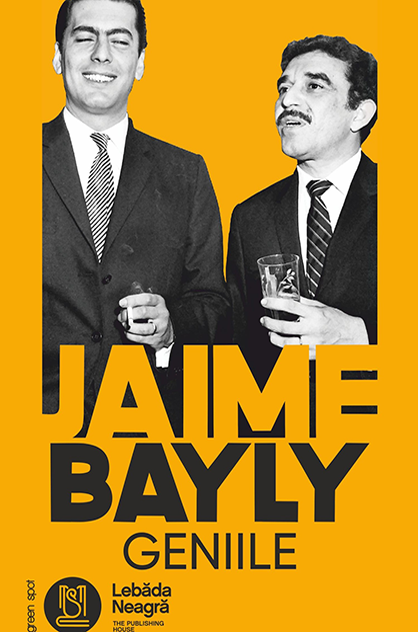
„Geniile” de Jaime Bayly este un roman care pornește de la un episod real și intens din lumea literară latino-americană: ruptura prieteniei dintre doi titani, Gabriel García Márquez și Mario Vargas Llosa. Cartea își propune să reconstruiască tensiunile, orgoliile și momentele care au dus la celebra palmă din 1976, dar o face printr-o ficționalizare amplă, plină de dialoguri și interpretări.
Am început lectura cu entuziasm. Mă așteptam să descopăr întâmplări fascinante din culisele vieții celor doi mari scriitori, să văd cum s-au cunoscut, cum s-au susținut, cum s-a ajuns la conflict. Credeam că voi intra în lumea lor, că voi simți vibrația prieteniei și apoi dezamăgirea trădării. Din păcate, experiența mea a fost cu totul alta.
Romanul alternează perspectivele și introduce o mulțime de personaje secundare: soții, prieteni, scriitori, oameni din cercul lor apropiat. Apar Carmen Balcells, agenți literari, jurnaliști, cunoștințe din Barcelona și Lima. Problema este că sunt atât de multe nume, unele asemănătoare, încât ajungi să te oprești des și să te întrebi: „Cine era acesta?”. În loc să mă simt prinsă în poveste, m-am simțit pierdută într-un labirint de personaje greu de reținut.
Portretul lui García Márquez este construit în jurul farmecului său, al succesului uriaș după „Un veac de singurătate”, al relației apropiate cu soția sa, Mercedes. Vargas Llosa apare mai tensionat, mai orgolios, frământat de gelozii și nesiguranțe, mai ales în relația cu soția lui, Patricia. Se insistă mult pe conflictele conjugale, pe suspiciuni și pe bârfe. Practic, mare parte din acțiune se concentrează pe criza din căsnicia lui Vargas Llosa și pe presupusa implicare a lui García Márquez în problemele lor. Scenele se repetă: certuri, reproșuri, frământări interioare, discuții reluate din alte unghiuri.
Limbajul mi s-a părut greoi și obositor. Deși cartea vrea să fie intensă și pasională, frazele sunt adesea încărcate, iar dialogurile se lungesc fără să aducă mereu ceva nou. În plus, pe aproape fiecare pagină apare cuvântul „leală”. Da, este corect din punct de vedere gramatical, dar repetat obsesiv ajunge să te deranjeze. La un moment dat nu mai auzeam ideea din spatele cuvântului, ci doar sunetul lui, care parcă mă scotea din ritmul lecturii.
Acțiunea în sine mi s-a părut repetitivă. Se revine constant la aceleași suspiciuni, la aceleași tensiuni, la aceleași interpretări ale gesturilor. În loc să simt că povestea evoluează și se adâncește, am avut impresia că se învârte în cerc. Momentul culminant, celebra palmă, este pregătit îndelung, dar drumul până acolo a fost pentru mine prea lung și prea încărcat.
Cel mai mult m-a dezamăgit faptul că nu am reușit deloc să mă conectez emoțional cu lectura. Nu am simțit apropiere față de personaje, nu am simțit dramă autentică, ci mai degrabă o reconstrucție rece, uneori exagerată. Mă așteptam la o incursiune vie în universul a două „genii”, dar am primit o poveste care m-a ținut la distanță.
Pentru mine, „Geniile” a fost o lectură de două stele: interesantă ca idee și ca punct de plecare, dar dificilă ca stil și obositoare ca structură. Poate că alți cititori, pasionați de istoria literaturii latino-americane, vor aprecia mai mult detaliile și interpretările. Eu, însă, am închis cartea cu sentimentul că aș fi vrut mai multă claritate, mai multă profunzime reală și mai puțină repetiție.


The Geniuses – Jaime Bayly
“The Geniuses” by Jaime Bayly is a novel that starts from a real and intense episode in the Latin American literary world: the rupture of the friendship between two titans, Gabriel García Márquez and Mario Vargas Llosa. The book sets out to reconstruct the tensions, the egos, and the moments that led to the famous punch in 1976, but it does so through an extensive fictionalization, filled with dialogues and interpretations.
I began reading with enthusiasm. I expected to discover fascinating behind-the-scenes moments from the lives of these two great writers—to see how they met, how they supported each other, and how the conflict began. I thought I would step into their world, feel the vibration of their friendship and then the disappointment of betrayal. Unfortunately, my experience was entirely different.
The novel alternates perspectives and introduces a large number of secondary characters: wives, friends, writers, and people from their inner circle. Carmen Balcells appears, along with literary agents, journalists, and acquaintances from Barcelona and Lima. The problem is that there are so many names, some of them similar, that you often have to stop and ask yourself, “Who was this again?” Instead of feeling immersed in the story, I felt lost in a maze of characters that were hard to keep track of.
García Márquez’s portrait is built around his charm, his enormous success after One Hundred Years of Solitude, and his close relationship with his wife, Mercedes. Vargas Llosa appears more tense, more prideful, troubled by jealousy and insecurities, especially in his relationship with his wife, Patricia. Much attention is given to marital conflicts, suspicions, and gossip. In fact, a large part of the action focuses on the crisis in Vargas Llosa’s marriage and the alleged involvement of García Márquez in their problems. Scenes repeat themselves: arguments, reproaches, inner turmoil, conversations revisited from different angles.
I found the language heavy and tiring. Although the book aims to be intense and passionate, the sentences are often overloaded, and the dialogues drag on without always adding something new. Moreover, on nearly every page, the word “loyal” appears. Yes, it is grammatically correct, but repeated obsessively, it becomes irritating. At some point, I stopped hearing the idea behind the word and only noticed its sound, which pulled me out of the rhythm of the reading.
The action itself felt repetitive. The same suspicions, the same tensions, the same interpretations of gestures are constantly revisited. Instead of feeling that the story was evolving and deepening, I had the impression that it was going in circles. The climactic moment—the famous punch—is prepared at length, but for me, the road to get there was too long and too crowded.
What disappointed me most was that I never managed to connect emotionally with the book. I did not feel close to the characters, nor did I sense authentic drama—rather, a cold reconstruction, at times exaggerated. I expected a vivid journey into the universe of two “geniuses,” but instead I received a story that kept me at a distance.
For me, „The Geniuses” was a two-star read: interesting in concept and as a starting point, but difficult in style and tiring in structure. Perhaps other readers, especially those passionate about the history of Latin American literature, will appreciate the details and interpretations more. As for me, I closed the book wishing for more clarity, more genuine depth, and less repetition.
