
- Rating: ★★★★★
- Editura: Bookzone
- Traducere: Cristina Jinga
- Pagini: 368
- Goodreads: Am locuit cândva aici
- Poate fi cumpărată de aici: https://bookzone.ro/carte/am-locuit-candva-aici-bkz
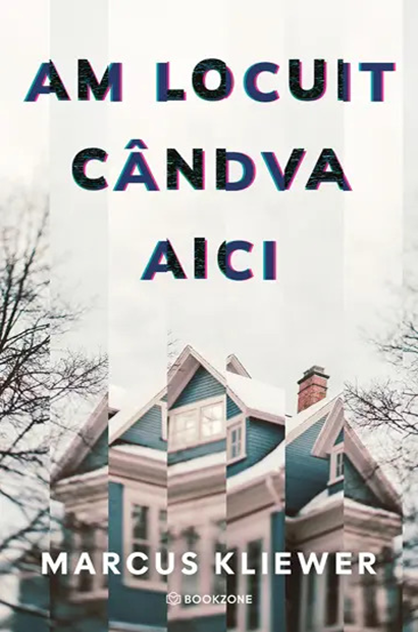
„Am locuit cândva aici” de Marcus Kliewer este genul de carte care te prinde într-o capcană din care nu mai poți ieși. Este o poveste despre o casă veche care pare să respire, despre oameni care nu sunt ceea ce par și despre o minte care, pas cu pas, începe să-și piardă reperele. Mi-a plăcut enorm această carte, pentru că nu este doar un thriller sau un horror, ci o experiență intensă, stresantă, aproape sufocantă, care te obligă să mergi mai departe, chiar și atunci când ai vrea să te oprești.
Eve Palmer și Charlie ajung pe Heritage Lane cu un plan simplu: să renoveze o casă veche dintr-un cartier select și să o vândă mai departe. Totul pare normal la început, chiar promițător. Însă foarte repede apare senzația că locul ascunde ceva. Casa nu este doar o clădire, ci un spațiu încărcat de trecut, de amintiri care nu vor să rămână îngropate. Eve este un personaj extrem de credibil, cu dorința constantă de a face pe plac, de a evita conflictele, iar tocmai această trăsătură o va împinge într-o situație în care nu mai are control.
Într-o zi, în mijlocul unei furtuni de zăpadă, la ușă apare Thomas Faust, alături de familia lui. Spune că a locuit cândva în acea casă și că ar vrea să le-o arate copiilor. Deși ceva nu se leagă, Eve îi lasă să intre. Din acel moment, totul începe să se destrame. Străinii se poartă de parcă locuința le-ar aparține: își revendică întreaga casă, povestesc amintiri imposibile, cunosc detalii pe care nu ar avea cum să le știe. Atmosfera devine rapid apăsătoare, iar cititorul simte că asistă la începutul unui joc macabru, ale cărui reguli nu sunt clare.
Pe măsură ce familia Faust se instalează, casa pare să se transforme. Ușile nu mai duc unde ar trebui, spațiile se modifică, iar realitatea devine instabilă. Sunt momente care par instrucțiuni dintr-un coșmar: scări care duc spre locuri imposibile, uși care trebuie deschise și închise într-o anumită ordine, prezențe care nu trebuie privite în ochi. Totul este construit ca un labirint psihologic, în care fiecare pas greșit te afundă și mai tare.
Când Charlie dispare, lumea lui Eve se prăbușește complet. Din acel punct, frica nu mai este doar legată de casă sau de străini, ci devine personală, viscerală. Întrebările se adună una după alta: cine sunt acești oameni, ce vor cu adevărat, unde este Charlie și de ce casa pare să-și aleagă singură locatarii? Am simțit pe tot parcursul lecturii o presiune constantă, o grabă aproape dureroasă de a ajunge la final, doar ca să aflu adevărul.
Unul dintre cele mai tulburătoare aspecte ale cărții este felul în care trecutul se infiltrează în prezent. Amintirile nu mai aparțin unui singur personaj, ci se transferă, se amestecă, devin greu de diferențiat. Scenele în care Eve este invadată de fragmente din viața altcuiva sunt extrem de intense și dureroase, iar transformarea lentă a realității este făcută cu o precizie care te destabilizează. Personajele sunt construite excelent, credibil, iar răul nu este niciodată simplu sau explicat prea ușor.
Am citit pe coperta cărții o recenzie care spunea că acest roman se simte ca o criză de anxietate, și nu pot fi mai mult de acord. Este o carte care te ține în tensiune continuă, care nu îți oferă pauze reale și care nu te lasă să ghicești ce urmează. Nu am bănuit niciun moment ce se întâmplă cu adevărat, iar fiecare revelație m-a luat complet prin surprindere.
Pentru mine, „Am locuit cândva aici” este o lectură de cinci stele, un thriller spre horror extrem de alert, inteligent și tulburător, care îți rămâne în minte mult timp după ce ai întors ultima pagină. Este genul de carte care te face să te uiți altfel la ideea de „acasă” și să te întrebi cât de bine cunoști locurile în care trăiești.


We Used to Live Here – Marcus Kliewer
“We Used to Live Here” by Marcus Kliewer is the kind of book that traps you in a snare you can’t escape. It’s a story about an old house that seems to breathe, about people who are not what they appear to be, and about a mind that, step by step, begins to lose its bearings. I loved this book immensely because it’s not just a thriller or a horror novel, but an intense, stressful, almost suffocating experience that forces you to keep going, even when you desperately want to stop.
Eve Palmer and Charlie arrive on Heritage Lane with a simple plan: renovate an old house in an upscale neighborhood and sell it for a profit. At first, everything seems normal—almost promising. But very quickly, the sense creeps in that the place is hiding something. The house isn’t just a building; it’s a space heavy with the past, with memories that refuse to stay buried. Eve is an extremely believable character, driven by a constant need to please, to avoid conflict—and it’s precisely this trait that pushes her into a situation where she loses all control.
One day, in the middle of a snowstorm, Thomas Faust shows up at the door with his family. He says he once lived in the house and would like to show it to his children. Even though something feels off, Eve lets them in. From that moment on, everything begins to unravel. The strangers behave as if the house belongs to them: they claim every room, recount impossible memories, and know details they couldn’t possibly know. The atmosphere quickly becomes oppressive, and the reader feels like they’re witnessing the beginning of a macabre game whose rules are completely unclear.
As the Faust family settles in, the house itself seems to change. Doors no longer lead where they should, spaces shift, and reality becomes unstable. There are moments that feel like instructions from a nightmare: staircases leading to impossible places, doors that must be opened and closed in a specific order, presences that must not be looked at directly. Everything is constructed as a psychological labyrinth, where every wrong step pulls you in deeper.
When Charlie disappears, Eve’s world collapses entirely. From that point on, fear is no longer just about the house or the strangers—it becomes personal, visceral. Questions pile up one after another: who are these people, what do they really want, where is Charlie, and why does the house seem to choose its own inhabitants? Throughout the entire reading experience, I felt a constant pressure, an almost painful urgency to reach the end just to uncover the truth.
One of the most disturbing aspects of the book is the way the past seeps into the present. Memories no longer belong to just one character; they transfer, blur, and become difficult to distinguish. The scenes in which Eve is invaded by fragments of someone else’s life are incredibly intense and painful, and the slow transformation of reality is handled with a precision that completely destabilizes you. The characters are excellently crafted and believable, and evil is never simple or too easily explained.
I read a blurb on the cover that said this novel feels like an anxiety attack, and I couldn’t agree more. It’s a book that keeps you in constant tension, offers no real pauses, and never lets you guess what’s coming next. I never once suspected what was truly happening, and every revelation caught me completely off guard.
For me, “We Used to Live Here” is a five-star read—an extremely fast-paced, intelligent, and unsettling thriller leaning into horror, one that stays with you long after you’ve turned the final page. It’s the kind of book that makes you look differently at the idea of “home” and question how well you really know the places you live in.
