
- Rating: ★★★★★
- Editura: Niculescu, imprint Memorii
- Traducere: Magda Dumitru
- Pagini: 200
- Goodreads: Gemenele de la Auschwitz
- Poate fi cumpărată de aici: https://www.niculescu.ro/gemenele-de-la-auschwitz-povestea-adevarata-a-unei-romance-care-a-supravietuit-lagarului-mortii.html
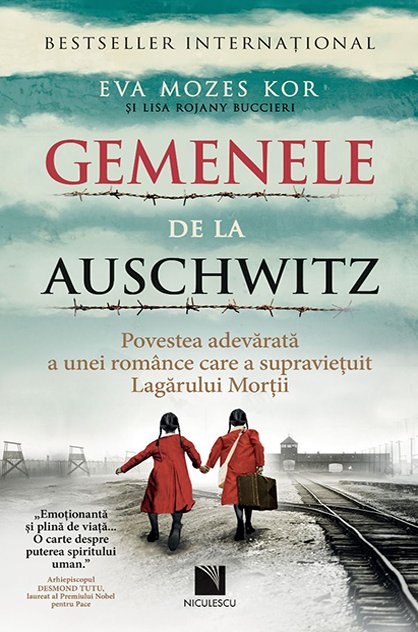
„Gemenele de la Auschwitz” de Eva Mozes Kor și Lisa Rojany Buccieri este una dintre acele lecturi care îți intră în suflet și nu mai pleacă niciodată. Mi-a fost extrem de greu să mă întrerup din citit, pentru că povestea Evei și a lui Miriam, două fetițe gemene dintr-un sat românesc, m-a emoționat din încă de la început. Lecturile despre Auschwitz mereu mă emoționează până la lacrimi, dar această carte a avut ceva în plus: a fost pentru prima dată când am citit despre o protagonistă româncă dusă în lagăr, iar asta mi-a făcut durerea și mai personală.
Cartea urmărește drumul gemenelor din micuțul lor sat din Transilvania până la sosirea în lagărul de la Auschwitz. Eva și Miriam sunt doar două copile, dar în momentul în care ajung acolo, își pierd brusc copilăria. Sunt separate de părinți, smulse din viața lor liniștită și aruncate direct în mâinile doctorului Mengele, cel care le transformă în „material de experiment”. Detaliile legate de procedurile la care au fost supuse sunt greu de citit, chiar și când autorii folosesc un limbaj simplu. De fiecare dată când deschid o carte despre Auschwitz, simt o durere în piept, dar aici parcă fiecare pagină venea cu o lovitură nouă.
Ceea ce m-a impresionat enorm la Eva și Miriam este legătura dintre ele. Chiar și în cele mai întunecate momente, cele două găsesc puterea să se încurajeze, să se protejeze una pe cealaltă și să își repete mereu că trebuie să supraviețuiască împreună. Forța lor interioară m-a uimit. În timp ce citeam despre ororile prin care treceau – foame constantă, frig, umilință, injecții dureroase și experimente înfiorătoare – vedeam cum nu renunță nicio clipă să spere. Deși am citit și alte cărți despre acest subiect, aici durerea mi s-a părut mult mai aproape, mult mai vie.
Pe măsură ce povestea avansează, ai impresia că fiecare zi în lagăr este o luptă pentru viață. Fetițele trec prin momente care ar doborî orice adult, dar ele își găsesc puterea în faptul că sunt împreună. Își împart fiecare firimitură, fiecare clipă de odihnă, fiecare zâmbet rar. Au un curaj care te lasă fără cuvinte, iar felul în care Eva povestește — sincer, direct și cu o maturitate născută din suferință — face totul și mai tulburător.
Momentul eliberării ar trebui să fie un punct luminos, și într-un fel este. Reușita lor de a scăpa din acel infern mi-a dat fiori de bucurie, însă adevărata lovitură emoțională vine după aceea. Când se întorc în satul lor natal și descoperă că nimic nu mai este așa cum l-au lăsat, am simțit o tristețe profundă. Casele, oamenii, atmosfera — totul poartă semnele războiului și ale pierderii. Mi-am imaginat cât de greu trebuie să fi fost pentru două fetițe care și-au dorit doar să ajungă acasă, dar au găsit un loc schimbat pentru totdeauna. A fost unul dintre cele mai dureroase momente ale cărții.
Pentru mine, „Gemenele de la Auschwitz” este o lectură necesară. Da, doare. Da, te face să plângi. Dar este și o poveste despre curaj, rezistență și legătura incredibilă dintre două surori care au refuzat să renunțe una la cealaltă. M-a atins profund, iar puterea gemenelor m-a inspirat și m-a emoționat de nenumărate ori.
O carte pe care o recomand din tot sufletul — o mărturie despre supraviețuire, dar și despre cum dragostea poate ține aprinsă flacăra speranței chiar și în cele mai întunecate locuri.


The Twins of Auschwitz – Eva Mozes Kor & Lisa Rojany Buccieri
“The Twins of Auschwitz,” by Eva Mozes Kor and Lisa Rojany Buccieri, is one of those books that settles deep into your soul and never truly leaves. I found it incredibly hard to stop reading, because the story of Eva and Miriam, two twin girls from a Romanian village, moved me from the very beginning. Books about Auschwitz always bring me to tears, but this one had something extra: it was the first time I read about a Romanian protagonist taken to the camp, and that made the pain feel even more personal.
The book follows the path of the twins from their small Transylvanian village all the way to their arrival at Auschwitz. Eva and Miriam are just children, but the moment they get there, they lose their childhood in an instant. They are separated from their parents, torn away from their peaceful life, and thrown straight into the hands of Dr. Mengele, who turns them into “experimental material.” The details of the procedures they were subjected to are difficult to read, even though the authors use simple language. Every time I open a book about Auschwitz, I feel a tightness in my chest, but here it felt as if every page delivered a new blow.
What impressed me enormously about Eva and Miriam is the bond between them. Even in the darkest moments, the two find the strength to encourage each other, protect each other, and constantly remind themselves that they must survive together. Their inner strength amazed me. As I read about the horrors they endured—constant hunger, cold, humiliation, painful injections, and terrifying experiments—I saw how they never once let go of hope. I’ve read other books on this topic, but here the pain felt much closer, much more alive.
As the story progresses, you get the sense that every day in the camp is a fight for life. The girls go through experiences that would crush any adult, yet they find strength in the fact that they are together. They share every crumb, every moment of rest, every rare smile. Their courage leaves you speechless, and the way Eva tells the story—honestly, directly, and with a maturity born out of suffering—makes everything even more haunting.
The moment of liberation should be a bright spot, and in a way it is. Their escape from that inferno filled me with shivers of joy, yet the real emotional blow comes afterward. When they return to their home village and discover that nothing is as they left it, I felt a profound sadness. The houses, the people, the atmosphere—everything bears the scars of war and loss. I imagined how difficult it must have been for two little girls who only wanted to go home, only to find a place changed forever. It was one of the most painful moments of the book.
For me, “The Twins of Auschwitz” is a necessary read. Yes, it hurts. Yes, it makes you cry. But it’s also a story about courage, resilience, and the incredible bond between two sisters who refused to give up on each other. It touched me deeply, and the strength of the twins inspired and moved me countless times.
A book I wholeheartedly recommend — a testimony of survival, but also a reminder that love can keep the flame of hope alive even in the darkest places.
